
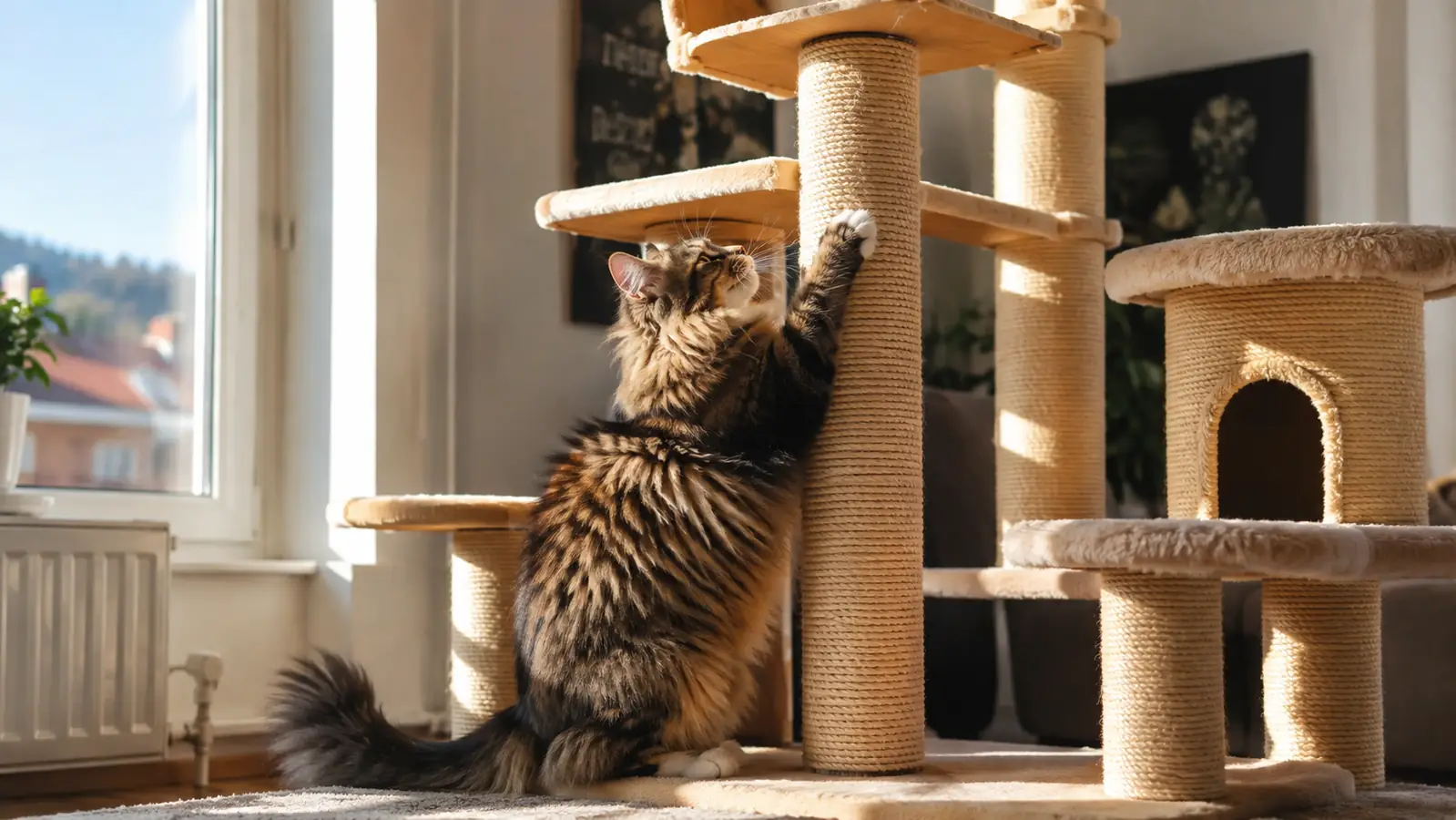
If your living room couch has that frayed, threadbare corner, you already know exactly what I'm about to describe. You've tried the spray bottle. You've tried the double-sided tape on the armrests. You've tried a firm "no" every single time you caught the cat at it, and you're still finding shredded corners and kicked-up fuzz at the base of the cushions. I've been there with my own three, so I'll say this plainly: stop blaming the cat. Scratching is what a cat's front paws are built to do. It stretches their back and shoulders, it keeps their claws trimmed and healthy, and it leaves their scent so the room feels like theirs. Your job is not to stop them scratching. Your job is to give them somewhere better to scratch.
A solid, well-placed cat tree with real sisal posts has been the single most effective fix I've found in years of living with cats, and it's the one people usually set up wrong. I'll walk you through the whole method using the Yaheetech 63-inch tree, the one that finally held up in my living room, but every step works with any stable, sisal-covered tree. This article is the step-by-step method I actually used to get a couch-chewing cat off the furniture and onto the sisal, in order, with the mistakes that made it nearly fail the first time. Nothing here is fancy. It's just honest, patient work, and it works.
The One Tool That Made the Difference
For a tall, stable tree that survives heavy cats and gives them plenty of sisal to wear down, I keep coming back to the Yaheetech. It won't topple when a cat really leans into a scratch, which is exactly what you need for this method to work.
Amazon Check Today's Price on Amazon →I want to take a second on why sturdiness is the part you shouldn't skimp on, because it's the place a cheap fix quietly fails. A cat won't scratch a post that wobbles under its weight. If the tree shifts or creaks the moment a cat leans into a good scratch, the cat reads that as unreliable and goes back to the couch, which has never once wobbled. That single reaction is why so many people tell you "cats just ignore cat trees," when the truth is those cats were ignoring a wobbly tree. A tree with a wide, stable base feels trustworthy under the claws, and a large, heavy cat especially needs that. It's the difference between a fix that lasts and a prop that gathers dust in a corner.
Why Your Cat Picks the Couch in the First Place
Before any step makes sense, you have to understand the why. A cat doesn't scratch the couch because it's spiteful, and it doesn't do it to ruin your weekend. It scratches the couch because the couch is the biggest, most solid object in the room that sits right where the cat spends its day, right where the family sits, right where the cat's own scent already lives. The fabric gives satisfying resistance under the claws, and the spot happens to be at the exact height the cat likes to stretch to. Put a flimsy scratcher in the corner of a spare room you never use, and of course the cat ignores it. You'd ignore a scratching post in a closet, too.
So the whole method hinges on one idea: you are not going to fight the scratching instinct, you're going to redirect it. The tree has to win the contest against the couch on the couch's own territory, by being taller, sturdier, more interesting, and sitting in the exact spot the cat already wants to be. Every step below is built on that single idea, so none of it is optional nice-to-have to dip into when you feel like it. Lay all the steps out up front, do them in order, and you'll see the shift happen.
Step 1: Put the Tree Where the Cat Already Scratches
This is the step almost everyone gets backwards, and it's the one that will make or break the whole thing. Do not put the cat tree in a quiet corner of the dining room because it looks tidy there. Put it right next to, or directly in front of, the spot your cat already scratches. If the couch corner is the target, the tree goes beside that couch corner. If it's the edge of the stairs, the tree goes by the stairs. The cat has already decided this is the place to be, so you meet it there rather than asking it to change both its location and its habit at the same time.
The height matters too. Cats like to stretch up as high as they can reach, so a tree that stands taller than the back of the couch gives them more reason to pick it. The Yaheetech is 63 inches, which towers over nearly any sofa, and the wide base keeps it planted when a cat really leans into a post. A short, wobbly tree simply loses this contest, because the couch is bigger, sturdier, and already where the cat likes to be.
Step 2: Make the Tree More Interesting Than the Couch
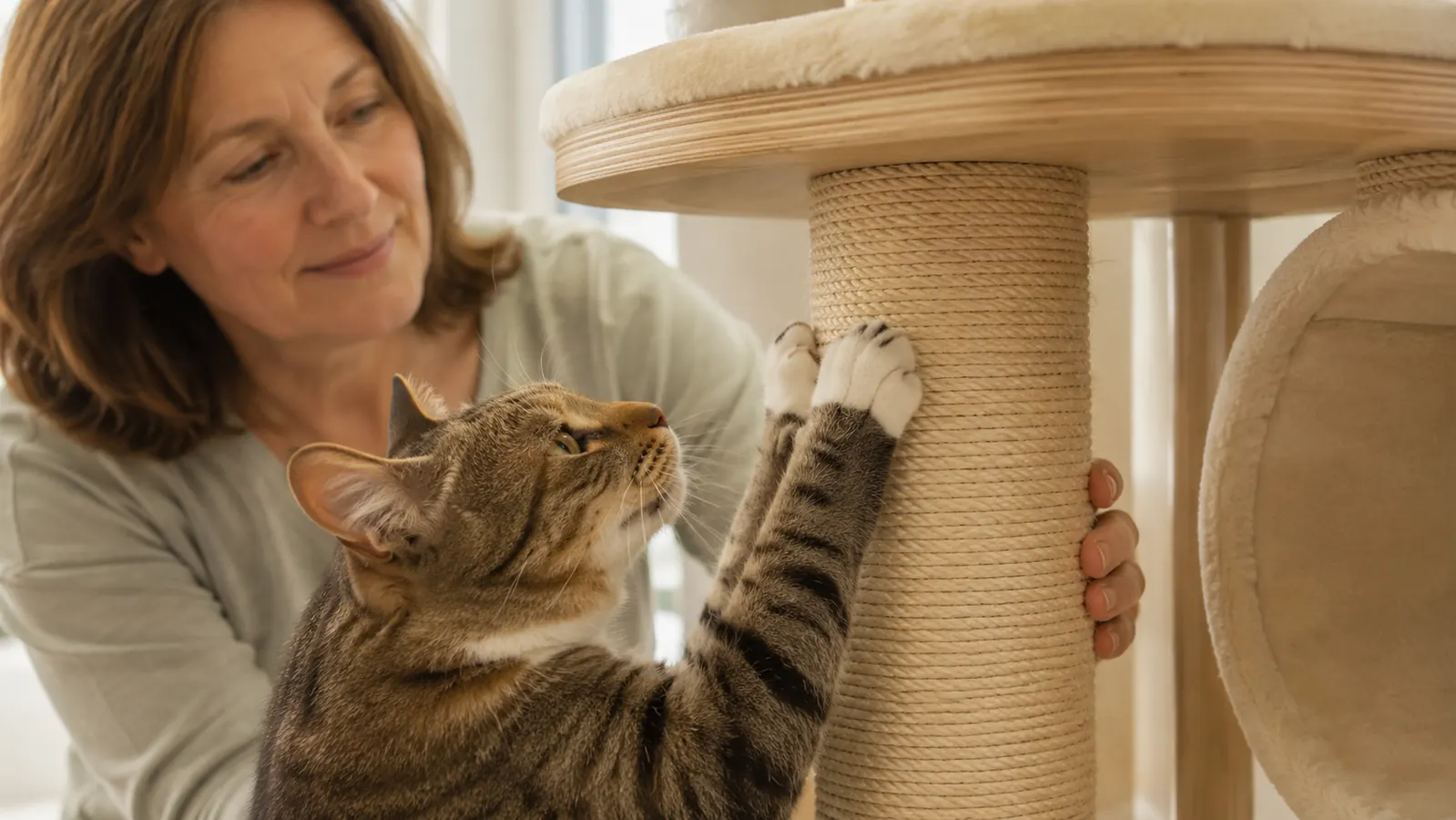
Once the tree is in the right place, you have to sell the cat on it. Cats are curious and a little suspicious all at once, so give the new tree every advantage. Sprinkle a little catnip on the sisal posts and on the top perch for the first week or two. Rub a soft cloth along your cat's cheeks to pick up its scent, then wipe that same scent onto the tree, especially the posts. A few treats placed on the lower platforms give the cat a reason to climb up and discover the whole thing.
A tree with real sisal matters more than you'd think. Cats prefer a rough, rope like surface they can really sink their claws into, and they'll pick natural sisal over carpet or fabric almost every time. The posts on the Yaheetech are wrapped in sisal, so the texture already does half the selling for you. If a cat is ignoring the posts, spend a day or two making the tree smell irresistible, and it usually finds its way up. That rough grip is the same texture that keeps a scratch from skipping, so the cat gets the satisfying resistance it's actually hunting for on the couch.
Step 3: Catch Them on the Tree and Make It Worth Their While
The moment you see even a hint of the cat scratching the posts, that's your window. Stay quiet, let them finish the scratch, then deliver the reward while they're still on the tree. A small treat, a chin scratch, a soft word of praise. The key is timing: the reward has to land within a few seconds of the behavior so the cat connects "scratch the sisal" with "good things happen." If you rush over mid-scratch and startle them, they'll learn the tree is a place to get interrupted, and the whole plan backfires.
Do the same rewarding thing every single time you see it, for a solid couple of weeks. Cats learn by repetition, not by one lucky moment, so consistency is the muscle that makes this stick. You're literally training a new habit one reward at a time, and it works exactly the way it does with a dog learning to sit. The more the tree becomes associated with treats, praise, and a calm, safe spot, the less the sofa even registers.
Step 4: Deter the Old Spot Without Scaring the Cat
While the tree becomes the reward center, you also have to make the couch corner less appealing, but gently. You do not want the cat to associate the living room with fear, or you'll trade one problem for a nervous cat. Instead, make the old spot physically less pleasant to scratch. Double-sided tape on the armrest and the taped corner works because cats hate the sticky feel under their claws. A loose sheet of aluminum foil draped over the top corner does the same job, since the crinkle and the feel are both off putting.
You only need to do this for the few weeks it takes the new habit to form. The goal is not to keep the couch taped up forever. It's to tip the balance so the tree feels better in the moment, long enough for the cat to forget the sofa was ever an option. When you see the cat consistently going to the tree on its own, you can peel the tape off and see if the habit holds. Usually it does, because by then the tree has won the contest on merit.
Step 5: Be Patient for Three to Four Weeks
Here's the honest part nobody likes to hear: this is not a one-afternoon fix. In my house, the first cat took about three weeks to fully switch, and the other two followed once they watched the first one get all the praise and the treats. You'll have good days and a few frustrating ones. The cat will test the tape corner again, and sometimes it will win a scratch before you notice. That's normal, and it's not a failure. It's a cat being a cat.
The temptation is to get impatient and either give up or spray the cat the moment it even looks at the sofa. Don't. Patience is the whole trick here. Every time you interrupt hard and punish, you chip away at the trust that makes the tree a safe place to be. Stay steady, keep the tree rewarding, keep the couch mildly unpleasant, and give it the better part of a month before you judge the result. In my experience, that's the honest timeline.
What Else Helps
A couple of small extras make the tree do more of the work. If you have multiple cats, they each want their own territory, so two trees or one with several posts and platforms spread the peace. Keep the tree where it gets regular attention, not hidden away. And trim your cat's front claws every few weeks with a proper grinder or clippers, because a shorter nail does a lot less damage if a stray scratch does land, and it keeps worn claws from snagging fabric.
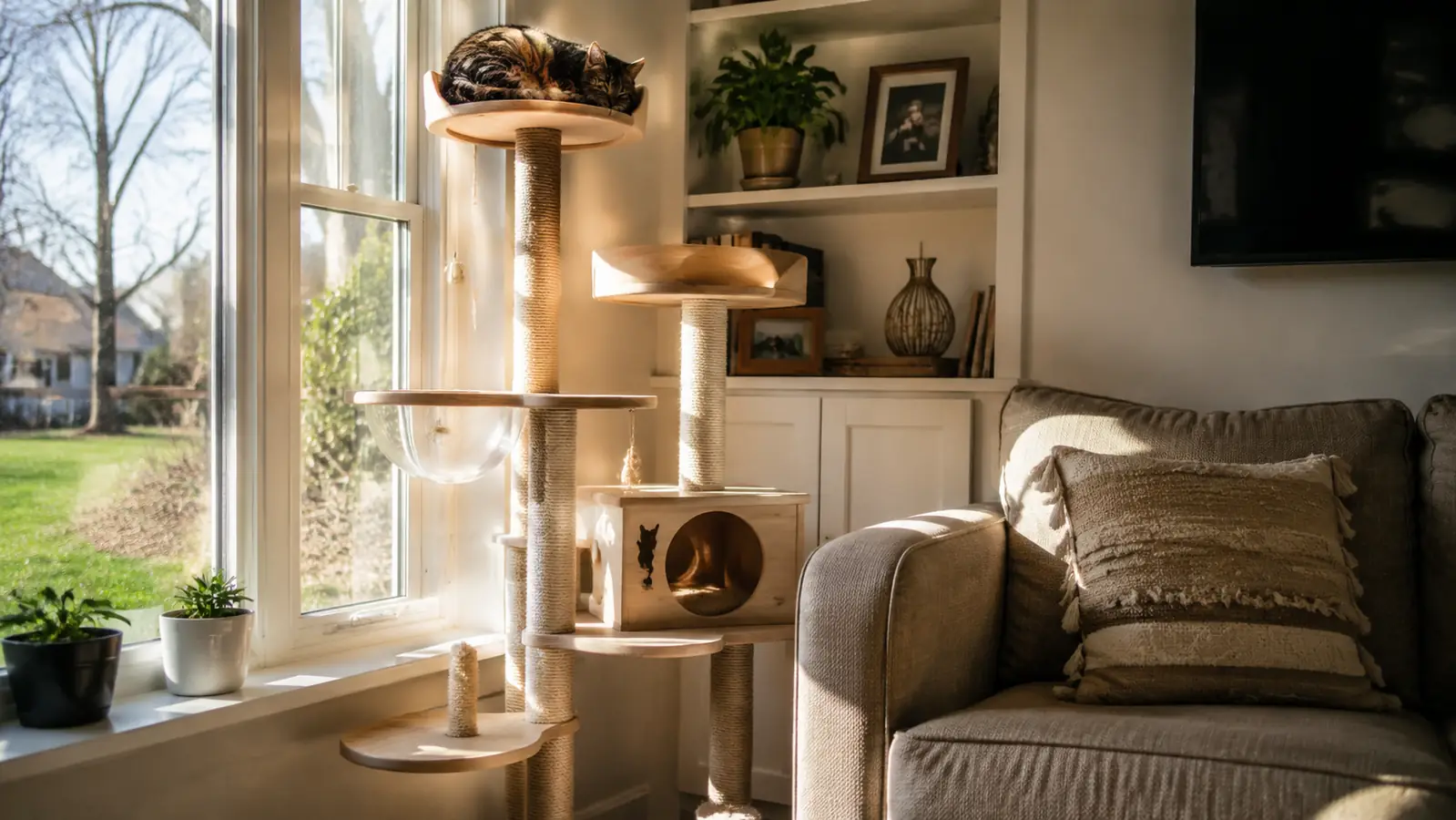
Think of the tree as a fixture, not a temporary prop. Once your cat adopts it, leave it be. Cats are creatures of habit, and the whole point is that the tree becomes the established, trusted place to scratch, stretch, and sleep for years, not weeks. A tree you keep in place and keep interesting is worth far more than one you move around every time you tidy the room.
My first cat switched from the couch corner to the sisal post in about three weeks, once the tree sat in the couch's spot and the reward landed within seconds of every good scratch.
As with everything, there are limits worth being honest about. A brand-new tree won't fix a cat overnight, and a cat that's scratching out of stress or a health issue needs your vet's eyes before any furniture exists in the conversation. But for the ordinary, everyday scratching that shreds a sofa, this method is the one that held for me, and it's held for years since. Give the tree the chance to win on the couch's own turf, and most cats will take the better deal every time.
Give Your Cat a Better Place to Scratch
The sturdier and taller the tree, the better this whole method works. The Yaheetech gives heavy cats a solid, sisal-covered place to wear down their claws, and it's built to handle years of daily use.
Amazon Check Today's Price on Amazon →