
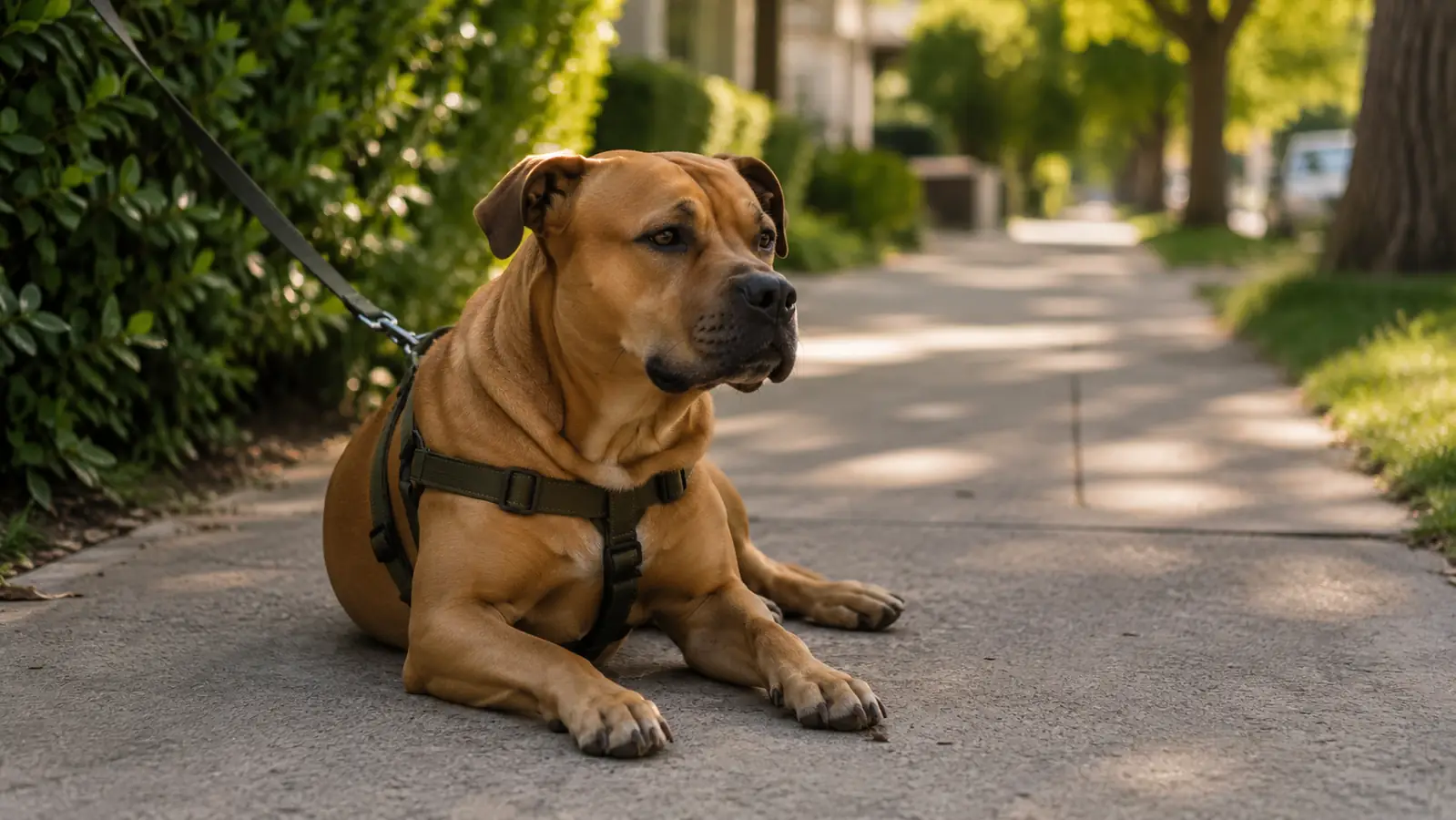
If you have a strong dog that pulls, you have probably stared at the same two names for weeks. The rabbitgoo no-pull harness with its two leash clips, and the PetSafe EasyWalk with its front clip and its leg loops. Both cost about the same. Both claim to fix the tug of war that turns a five-minute loop around the block into a forty-minute patience test. I owned both, walked my 75-pound yellow Lab named Gus on both, and I can tell you the short answer up front: for most pullers, the rabbitgoo is the one I reach for every single day, and the PetSafe EasyWalk is the one that has a very specific job it does better.
Neither of these is a gimmick, and neither is magic. A harness on its own will not train a dog to stop pulling any more than a better reel will cast your line for you. What a good no-pull harness does is take away the reward of pulling, mostly by steering the dog's chest sideways instead of letting momentum win. The winner here comes down to how your harness fits your particular dog, because a harness that shifts and rides up is a harness you will stop using by week two.
| rabbitgoo | PetSafe EasyWalk | |
|---|---|---|
| Clip | Front and back clip | Front clip only |
| Fit | Step-in or over-head vest, padded chest and belly panels | Over-head with two belly straps, no step-in |
| Steering | Front clip steers; back clip for calm dogs | Front clip is the only option, strongest steering |
| Materials | Breathable mesh step-in vest with soft padding and reflective trim | Lightweight webbing with a martingale-style chest |
| Best for | Strong daily pullers that need padding and a comfortable all-day fit | Hard pullers on short walks where every step needs steering |
| Build | Two clips, quick-release buckles, handle on the back | Two belly straps, martingale chest loop, no back clip |
Where rabbitgoo Wins
The first thing I noticed about the rabbitgoo is how comfortable it is for the dog wearing it. It is a padded step-in vest, which means you lay it flat, have Gus step in, and buckle it over his back. No hoisting him up like a sack of feed, which matters when your dog is 75 pounds and considers harness time the perfect opportunity for a nap. The chest and belly are padded with a soft mesh, so the pressure from a pull spreads out instead of digging in. Gus wore his for a full hour on a hot afternoon and there was no rubbing, no chafing, no raw spot under his front legs. That comfort is the reason we actually kept using it, and it is the reason I keep recommending it.
The other thing rabbitgoo gets right is versatility. It has two leash clips: one on the front of the chest and one on the back. When Gus was in his pulling phase, I used the front clip and it steered him sideways the moment he lunged. Now that he has mostly learned to walk loose, I clip to the back and give him a little freedom, which a front-only harness does not let you do. That one extra clip meant the harness grew with my dog instead of being outgrown the day he stopped lunging. It also has a handle on the back, which I grab when I need to steady him at the curb or lift him over a rough patch. The padding, the two clips, and the easy step-in fit are the three reasons this is the harness that hangs by my back door.
Durability has been a pleasant surprise too. After six months of near-daily walks, through rain and mud and a dog that deliberately drags his chest along the ground when he is happy, the rabbitgoo has held up. The buckles still click exactly right, the stitching is intact, and the reflective trim still shows up cleanly in a low evening light. I throw it in the washing machine on a gentle cycle roughly once a month and it comes out looking like new. For a harness that gets used this hard and this often, that kind of staying power is exactly what I want.
The harness I clip on every single walk
After months of daily use, the rabbitgoo no-pull harness is the one Gus wears without a fight and I can trust on a front clip when he forgets himself. If you want the padded, step-in harness with both clips, this is it.
Amazon Check Today's Price on Amazon →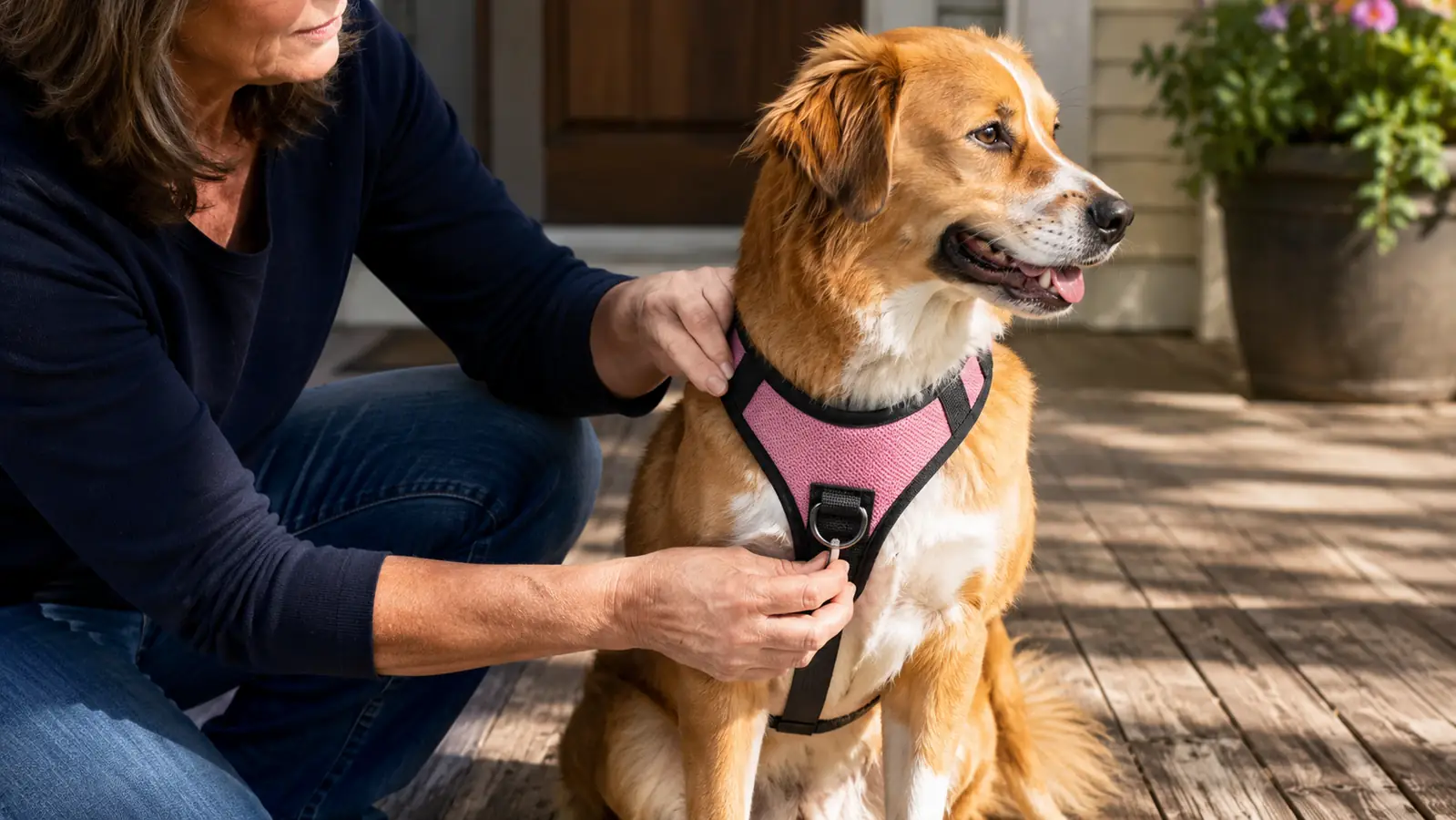
Where PetSafe EasyWalk Wins
I am not going to bury the lede. The PetSafe EasyWalk is the stronger steering tool of the two. It uses a martingale-style chest loop plus a front clip, which is the most aggressive way to turn a puller. The chest loop tightens gently as the dog pulls, and because there is no back clip at all, the leash pressure always lands on the front. On the worst of Gus's pulling days, when a squirrel sent him into a full lunge, the EasyWalk steered him off course faster than anything I tried. If your dog pulls hard enough that a walk feels like arm wrestling, and you only care about stopping that one behavior, this is the harness that does it with more authority.
The EasyWalk is also lighter and less bulky. It is thin webbing, so it packs down small and does not hold heat the way a padded vest can. That makes it a better pick for a hot summer walk or for a dog that refuses to wear anything that feels like clothing. It has been around for a long time and it shows: the sizing is broad, replacement parts are easy to find, and plenty of trainers recommend it by name, so you are dealing with a design that has been refined for years. Fit is a little more fiddly because you have to set two belly straps, and they can ride up on a deep-chested dog if you do not tighten them just right, so it takes a couple of tries to find the sweet spot. But once it is set, the steering is rock solid and the harness disappears under the dog's coat.
There is one thing I have to be honest about with the EasyWalk. Because it is a front-only harness, you are committed to that steering clip all the time. There is no back clip to switch to, so even on a calm day you are riding the front pressure, and the straps on a broad-chested dog like Gus wanted to slide up toward his armpits unless I checked them constantly. On a narrower dog it is a non-issue, and for a serious puller that steering is exactly what you want. It just is not the harness I reach for as an all-day, every-walk choice, and that is a difference you should know about before you decide.
The EasyWalk steered my puller harder, but the rabbitgoo is the one Gus still wanted to wear an hour later.
The Fit Question That Decides Everything
Every review you will read comes down to fit, and that is not a cop-out. A harness only works if it stays put, and these two fit very differently. The rabbitgoo is a step-in vest, so it goes over the chest and belly like a coat and stays where you put it even on a wiggly dog. That made it the winner for Gus, who is broad in the chest and does not like anything pinching his shoulders. The PetSafe EasyWalk, with its two belly straps, is better on a narrower, smoother-bodied dog where the straps sit flat and do not creep up. If you have a deep-chested or barrel-chested breed, the step-in vest of the rabbitgoo is usually the more forgiving fit, and that is the single biggest thing I would ask you to consider before you choose.
Sizing is worth a careful word on both. Neither harness is a one-size-fits-all, and the single most common complaint I see online is somebody buying the wrong size and blaming the harness. Measure your dog around the chest, behind the front legs, and follow the size chart that comes with each one. The rabbitgoo runs true to its vest sizing, while the EasyWalk rewards a snug two-strap fit that takes a bit of patience on the first wear. If you are between sizes on either harness, err toward the larger vest on the rabbitgoo and toward the snugger strap on the EasyWalk, and give either a week of daily wear before you decide it is wrong.
Price and Value Compared
Both of these harnesses sit in the same friendly budget range, which is a big part of why they are the two names everyone lands on. Neither is a splurge, and neither is a bargain-bin gamble. You are not paying a premium for either name, and you are not gambling on something that will fall apart in a month. The value question is really about what you get for that similar money over the life of the product.
The rabbitgoo gives you more in the box and more in the day-to-day: two clips instead of one, a padded vest instead of bare webbing, a carry handle, and a build that I have washed and reused for half a year without a hiccup. The EasyWalk gives you the single strongest steering action of any front-clip harness in this price range, plus a lighter profile for hot days. If you add up the months of comfortable daily use, I think the rabbitgoo is the better value for a typical owner, while the EasyWalk is the better value for the specific owner whose top priority is stopping hard pulls. Both are honestly priced, and I would be comfortable telling a friend to buy either one for the right dog.
What Training Actually Did
I want to be straight with you about one more thing, because nobody tells you it in the marketing. Gus did not stop pulling because of the harness alone. What changed was that the harness made the pulling effort, so he stopped getting the reward of surging forward. On the days I clipped to the front and turned him the instant he tensed up, he learned that pulling got him steered sideways, not closer to the squirrel. It took a few patient weeks of stopping, redirecting, and holding a loose leash before the behavior faded. Either harness puts you in a position to do that training; the difference is how comfortably and how long you are willing to keep your dog in it.
That comfort is where the rabbitgoo pulled ahead for us. Training a pulling dog takes repetition, and repetition only happens if you keep the walk going day after day. Because Gus stayed comfortable in the padded rabbitgoo, I kept doing the work. The EasyWalk was the sharper steering tool on any given day, but it was the harness I reached for less often, and consistency is what actually fixed the problem. If you are choosing between these two, ask yourself which one you will still be pulling off the hook three weeks from now, because that is the one that will help you most.
Who Should Buy Which
Buy the rabbitgoo if you want a comfortable, padded harness you can use every day, if your dog pulls hard but is not out of control, if you like the option of a front or back clip, if your dog is broad-chested, or if your dog is sensitive about things rubbing under its legs. It is the all-day, all-purpose pick, and it is the one I reach for on a normal morning walk with Gus. Buy the PetSafe EasyWalk if you have a serious, nonstop puller and your number one job is steering, if you are working through training and want the strongest front-clip control available, or if your dog runs hot and you want the lightest harness you can find. Both are honest, well-made tools. You just have to decide whether your dog needs the comfort or the steering.
For me, that decision was easy. Gus is a big, strong, ordinary dog, not a professional-level puller, and what I needed was a harness I would actually keep on him for years. That is the rabbitgoo. If your dog sits closer to the EasyWalk end of the spectrum, get the EasyWalk and do not look back. Either way, pair it with a little loose-leash training and you will stop dreading the walk before the same week is out.
Start with the harness that earns the daily walk
For most owners with a strong but ordinary puller, the padded, step-in rabbitgoo with both clips is the one that stays on and stays comfortable. Check today's price to see if it fits your budget.
Amazon Check Today's Price on Amazon →