
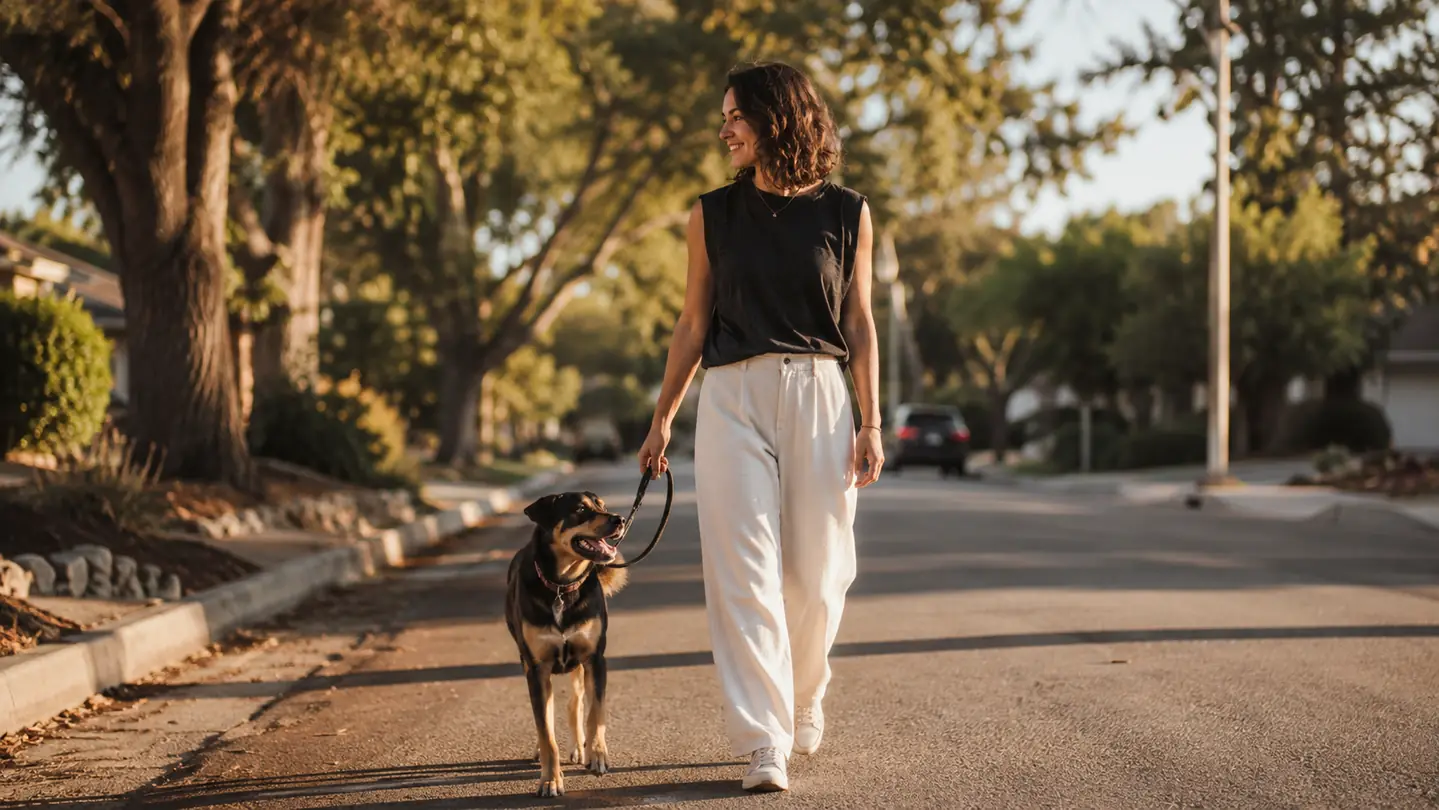
If your dog pulls on the leash, you already know how it starts. You open the front door, the dog hits the end of the line, and for the next half hour you are leaning back like you are fighting a fish that got off the hook. Your shoulder aches, your arm is tired, and neither one of you is enjoying the walk. I have been there with my own dogs more times than I can count, and I want to tell you that a no-pull harness, used the right way, is the single most useful tool I have found for turning that walk around.
Let me be direct about one thing before we start. A harness is not magic. You can strap the best harness on a dog and if you do nothing else, he will still pull, because pulling has been working for him. The point of a no-pull harness is that it makes pulling stop working, and then you teach the dog what does work. That combination, the right gear plus a little patient training, is what actually fixes the tug of war. The harness I walk my dogs in most days is the rabbitgoo no-pull harness, a front-clip style with two leash points, so that is what I am going to use as the example throughout. But every step here applies to any well-fitted front-clip harness you choose.
The Front Clip Is the Part That Stops the Pulling
A front-clip no-pull harness like the rabbitgoo clips your leash at the dog's chest, not his back. When he lunges, the pull turns him sideways toward you instead of dragging you forward. That one design detail does most of the work before you train a single step.
Amazon Check Today's Price on Amazon →Step 1: Fit the Harness Before You Blame the Gear
Every pulling problem I have ever been called in to look at started the same way: a harness that did not fit. If it is too loose, the dog spins and the whole thing rides up around his neck, which turns it into a fancy collar and the front clip does nothing. If it is too tight, the dog is uncomfortable, he fights the walk, and you are back to square one. Fitting is the step people skip, and it is the step that makes everything else work.
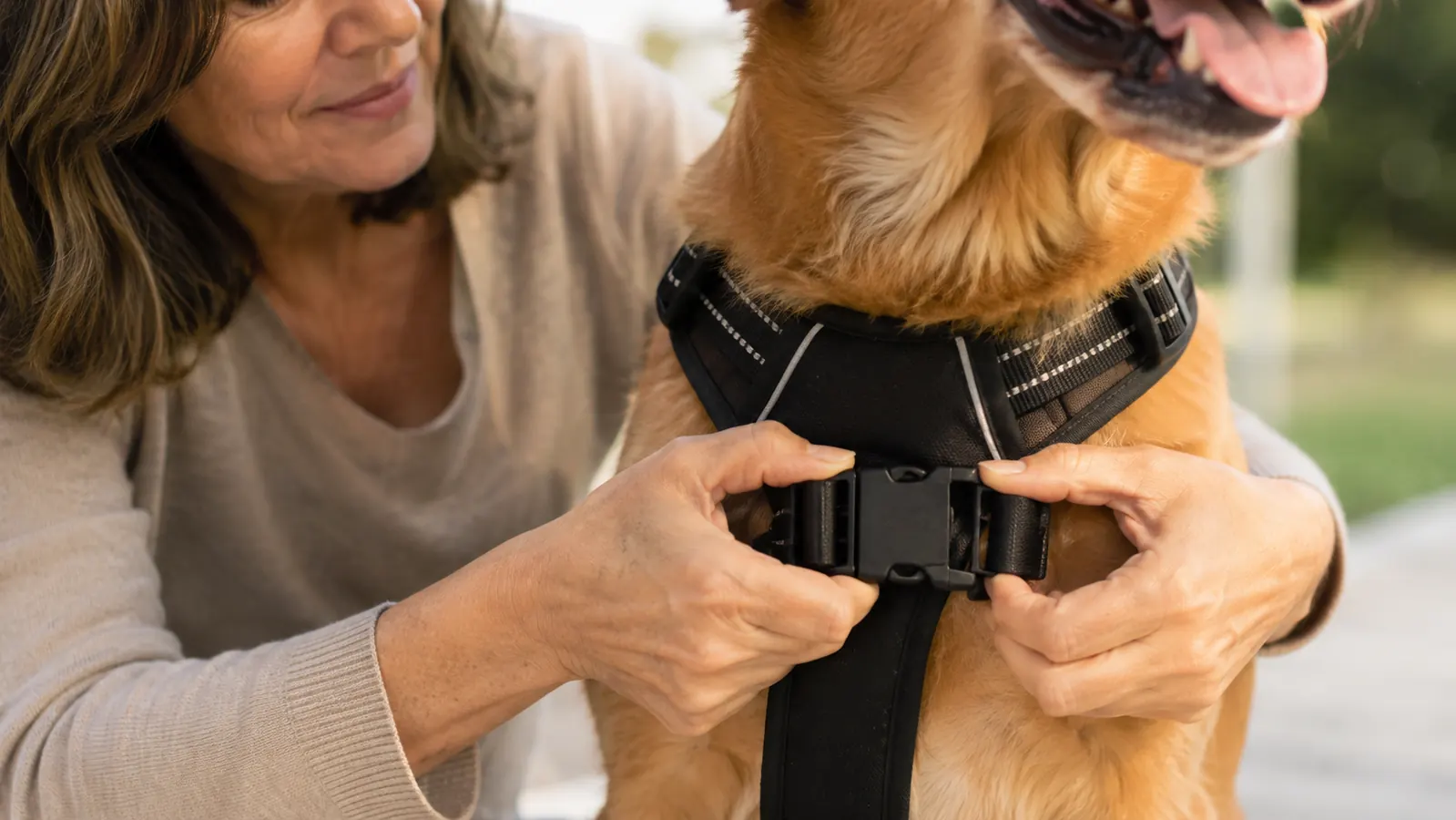
With the rabbitgoo, you want the padded chest piece sitting low and snug against the breastbone, not pressing on the throat. You should be able to fit two fingers flat under the straps, snug but not crushing. The handle on the top is a bonus: it lets you steady the dog at a curb or when a car passes, which helps a lot in the early training days. Measure your dog around the widest part of the ribcage and around the neck before you order, and when it arrives, put it on and check the fit like you would a new pair of boots. A harness that fits is the whole ballgame.
Step 2: Clip the Leash to the Front, Not the Back
Here is the part that surprises most owners. The rabbitgoo has two leash clips, one on the back and one on the chest. For a dog that pulls, you want the front clip, every time. When your leash attaches at the chest and your dog lunges forward, the pull does not drag you down the street. It steers him to the side, turning his front end back toward you. He cannot keep pulling in a straight line because the harness physically turns him.
Think of it like a rudder on a boat. A back clip is like pushing a boat from the stern, it just goes wherever it wants. A front clip grabs the bow and steers. That steering is what breaks the pulling habit, because the dog learns, on his own, that launching forward no longer gets him where he wants to go. You barely have to say a word. The harness does the teaching for you, and that is the whole reason I reach for a front-clip harness like this one instead of an ordinary collar.
Step 3: Let Him Pull Against the Harness and Learn It Stops Working
This is the step that feels backwards, so bear with me. The natural instinct when your dog pulls is to jerk back hard or hold the leash tight and brace. Please don't. If you hold tension on the leash the whole walk, your dog is pulling against steady pressure, which is exactly the game he is used to winning, and it wears your arm out for nothing. The trick is the opposite: keep the leash loose and slack, and let the front clip do the turning.
When your dog lunges, the harness turns his chest, the leash goes slack again, and you plant your feet and stand still. You do not yank, you do not lecture. You just stop. The moment he looks back at you, that is your opening to praise him and move forward. It is a small thing, but it teaches him a clear rule: pulling makes the walk stop, and looking back to you makes the walk start again. Fast as he is, he will catch on quicker than you expect. A dog that pulls is usually a smart dog who learned pulling works. You are simply teaching him a new way to get what he wants, which is to keep moving.
Step 4: Reward the Slack Leash, Not Just the Destination
Once the harness and the stopping are in place, your job is to make the loose leash worth his while. Pick a tiny high-value treat, something he only gets on walks, and keep it in a pouch you can reach one-handed. These days I also save a few treats for the fishing trips, the same idea, a special reward you only break out for the thing you really want to happen.
Here is the rhythm. When the leash goes slack and your dog drifts back to walk politely at your side, mark it with a quiet word and pop him a treat. Do it in that moment, not thirty seconds later, so the treat is attached to the slack leash. Walk three steps of slack, reward, walk another three, reward again. You are building a habit one step at a time. Keep the sessions short at first, ten minutes beats forty minutes of a tired, frustrated dog. Short, sharp, rewarding walks, three or four times a day if you can, beat one long sloppy one.
Step 5: Be Boring at the Door and Consistent Every Single Walk
Here is where most people undo the whole thing, and I have done it myself. The dog gets excited at the door, you let him drag you out half-charged, and the walk starts with a pulling match before you are ten feet from the house. The fix is boring. Make the dog sit and wait at the door before you open it, and keep him sitting while you step out first. If he bolts, close the door and wait ten seconds, then try again. You are not being mean. You are teaching him that the walk only starts when he is calm and the leash is slack.
The consistency is the part that makes the training stick. One walk of firm rules followed by one walk of letting him pull undoes a lot of progress, because dogs learn from what works most of the time, not what works some of the time. If you are firm about the front clip, the stopping, and the slack-leash reward on every single walk, most dogs show real improvement within a couple of weeks, and many get truly pleasant to walk within a month. My Rocky, who used to tow me like a sled, now waits at the door and walks at my side. The rabbitgoo harness did not train him by itself, but it made the training possible, and that is the honest difference between gear that helps and gear that just hangs on the wall.
What Else Helps
The harness is the anchor, but a few other things make the whole system stick together. A regular walking schedule helps, because a dog that knows when the walk is coming is calmer and less frantic when it does. Make sure your dog is getting enough exercise overall, a dog that has energy to burn will pull to try to spend it, so a brisk walk or some fetch earlier in the day can take the edge off your main training walk.
If you have a service or sport dog that genuinely needs to work while attached, you can use the back clip on the rabbitgoo for those moments and save the front clip for everyday walking. That flexibility is one of the reasons I like the two-clip design, it is not a one-trick piece of gear. And if you are a retiree with two dogs to handle at once, or you are getting older and your grip is not what it was, the extra control from a front clip is a real safety benefit, not just a nicety. It keeps you upright on the ice and the sidewalk, and that matters more than any training shortcut.
I clipped the leash to the rabbitgoo's front ring, let my 70-pound puller learn the harness was turning him sideways instead of dragging me, and within two weeks he was waiting at the door instead of dragging me through it.
How Fast Should You Expect Results, Honestly
Let me manage your expectations, because I have seen owners give up on day three and I want you to stick with it. The very first walk with the front clip is often the most dramatic, you will feel the difference in your shoulder immediately because the harness stops the forward drag on its own. But a habit that took months to build does not vanish in three days. Expect the first week to be a mix of good minutes and bad minutes. Expect the second week to be noticeably calmer. And expect a real turnaround somewhere between week two and week four if you are consistent.
Just remember the harness is doing its job when it feels almost too easy. If the dog hits the end of the front clip and swings politely back to you, that is not the harness failing, that is it working exactly as designed. The rabbitgoo has held up through months of daily walks with Rocky, the padding has stayed comfortable and the clips are still solid, which is what you want in a piece of gear you are going to use every single day. It holds up, and the training holds up with it.
Walk the Calm Dog You Already Wanted
A front-clip no-pull harness takes the strain off your shoulder and gives you the control to actually train the loose-leash walk. If your dog pulls, this is the gear change that makes the training stick.
Amazon Check Today's Price on Amazon →