
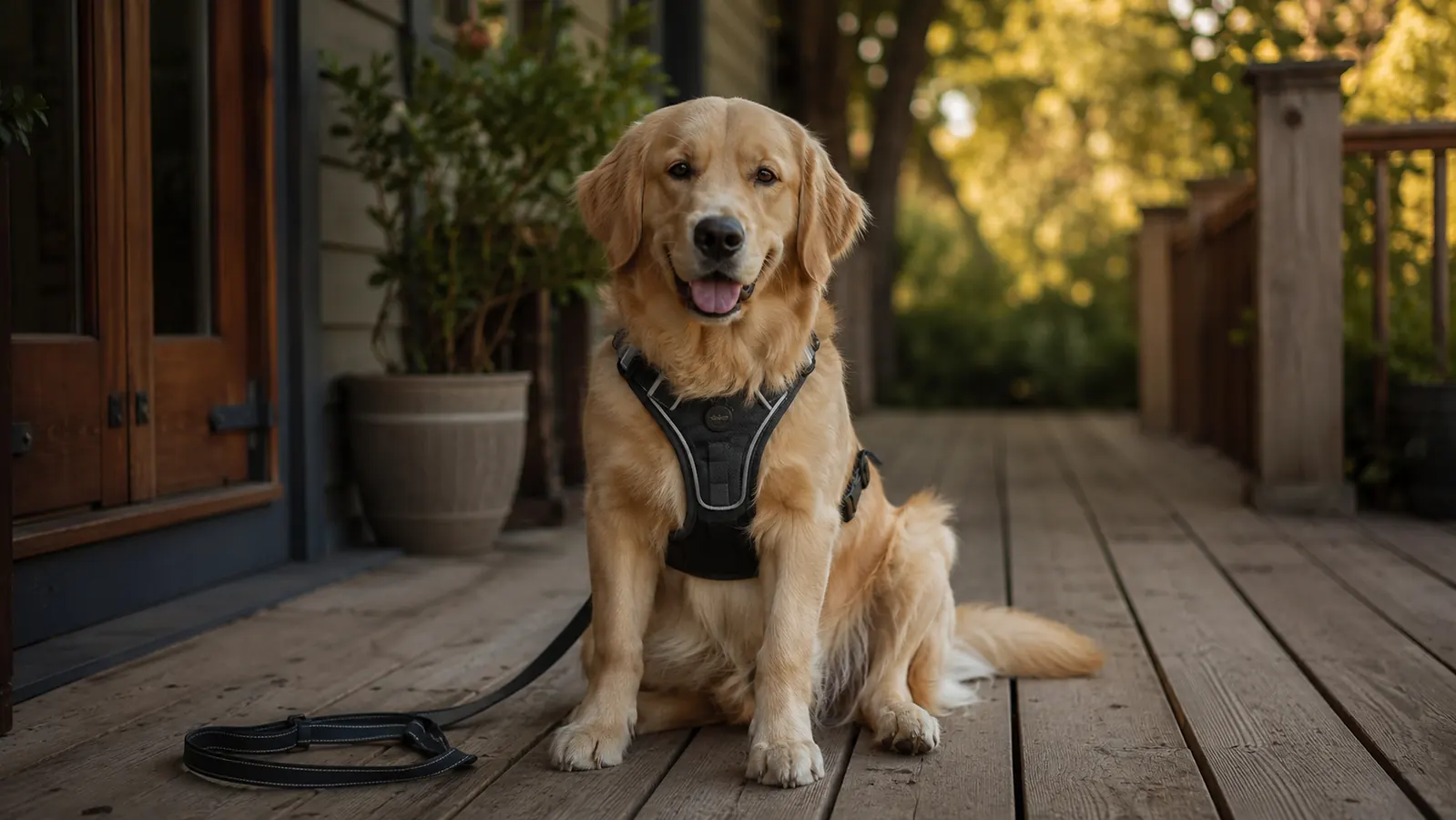
If you own a dog that pulls, you have probably looked at this harness. The rabbitgoo no-pull harness has almost two hundred thousand reviews and a 4.5 star average, which is a wall of approval that is hard to argue with. But I have been down this road before. I have bought the cheap strap that slipped sideways, the vest that chafed, and the one that my cautious, older dog refused to move in. So before I trusted a number like 196,490 reviews, I wanted to know what actually happened when I put one on a real puller and walked him every day for months. This is that story, including the parts the five star reviews leave out about sizing and fit.
I am Maggie. I have lived with dogs my whole adult life, and right now my stubbornest walking partner is Jake, a 65 pound rescue who decides where we go and how fast we get there. He was not a menace, just a chronic puller, the kind who would have throttled himself on a collar given a chance. I ran the rabbitgoo harness through a solid stretch of daily use to see whether the front clip really softened the yanking and whether the whole thing held up to a dog who treats every walk like a sprint.
The Quick Verdict
For a strong, healthy puller who needs gentle steering more than hard restraint, the rabbitgoo no-pull harness is a solid, affordable buy. Get the sizing right and it stays comfortable for hours. It is not the right fit for dogs with sensitive, easily irritated skin under the chest.
Amazon Check Today's Price →If your dog pulls your arm out of the socket on every walk, this is the harness I reached for daily
The front clip on the rabbitgoo harness turns most of that shoulder-yanking into a gentle redirect, and it held up to months of use with my strongest puller. See today's price on Amazon before you decide.
Amazon Check Today's Price on Amazon →How I've Used It
I did not test this harness on a weekend and file a review. I put it on Jake and ran him through what a normal owner actually does. That meant two walks a day, most days, through spring and summer, over pavement and grass, in rain and in heat. He does not pull hard the whole time. He surges, he lunges at squirrels, he leans into the leash when he catches a scent. That uneven pressure is exactly what wears a harness down, so it was a fair test.
I also left it on him for stretches longer than a walk. On Saturdays I take him along when I head out fishing early, and he rides and then walks along the shore for hours. A harness that digs in or slides around becomes obvious in that kind of long wear, and I wanted to see whether he was comfortable enough to ignore it entirely.
I paired it with the leash rabbitgoo sells alongside it, but any standard leash clips in fine. There are two metal clips on the harness, one on the chest and one on the back, so you choose where the leash attaches. That choice turned out to matter more than I expected, and I will walk you through it below.
The Front Clip Is the Real Story
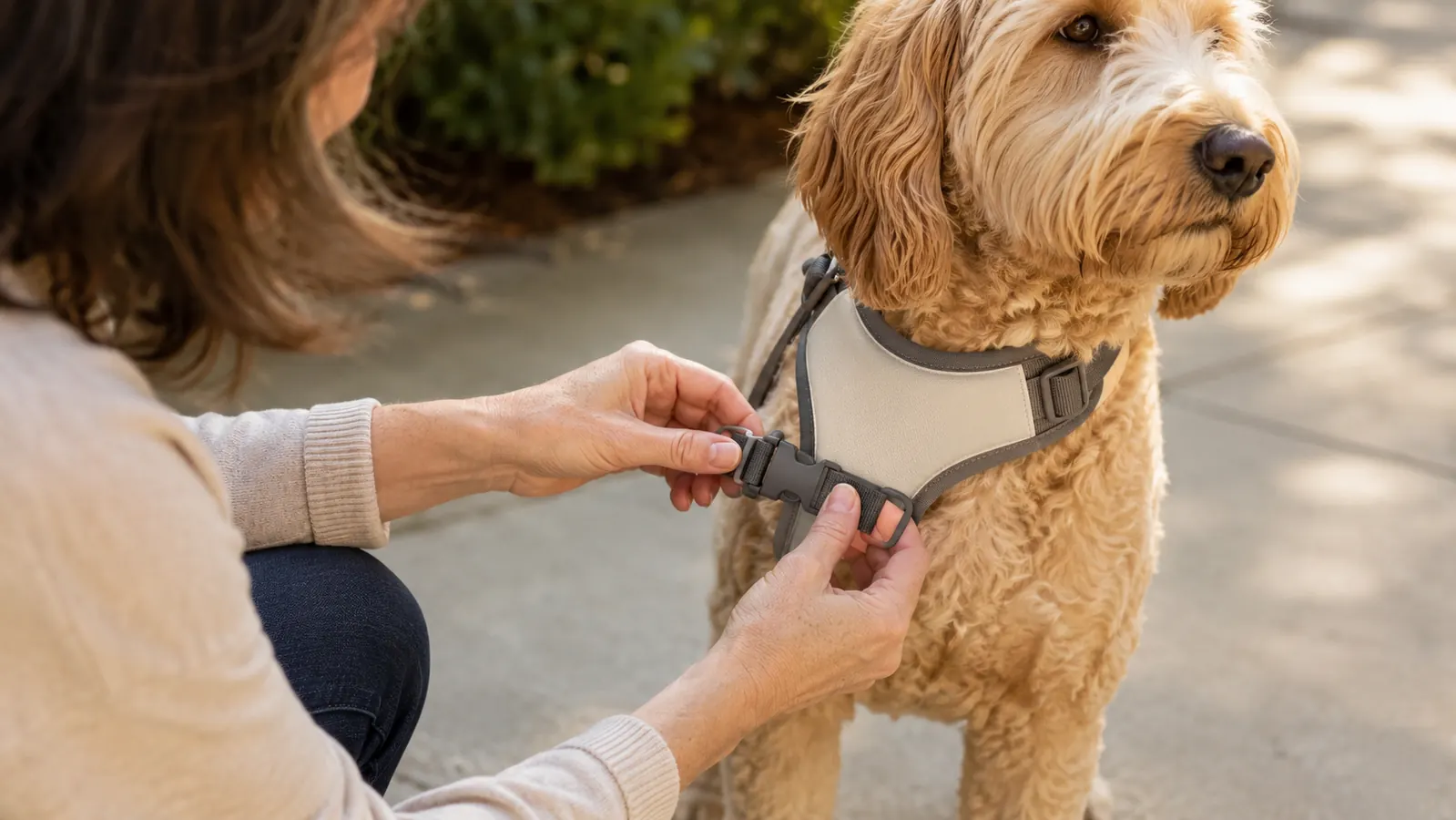
The reason to buy a no-pull harness over a collar is the front clip, and this is where the rabbitgoo earns its reputation. When the leash clips at the chest instead of the back, a forward lunge pulls the dog's own shoulders around. He is steering into the spot you want him to go instead of dragging straight away from you. It is not magic, and it will not instantly stop a determined puller, but it changed the physics of walking Jake in a way I could feel within the first mile.
Here is the honest part nobody puts in the five star reviews. The front clip is a teaching tool, not a handcuff. The harness makes pulling less rewarding and easier for you to counter, but a dog who has pulled for years still needs the patience of consistent walks on top of it. If you are looking for a device that makes a puller behave with zero effort from you, this is not it. If you are willing to put in a few weeks of calm, consistent walking, the harness does the heavy lifting that the collar never could.
The back clip is softer and better for casual strolls with a dog that does not pull. For Jake I stayed on the front clip, and the difference in how much my shoulder and low back complained at the end of the week was real. I used to come home from a walk with my arm aching. Now I come home sore from the pace we set, not from wrestling him.
The most specific win was the math my shoulder noticed: after three weeks on the front clip, my walks stopped ending with my lower arm aching from holding a yanking dog. That is not a feature on any box, but it is the whole point of the thing.
Sizing, and the One Trap That Bugs Owners
If you read through the lower star reviews, almost all of them are about one thing: sizing. The rabbitgoo harness runs on a chest girth measurement, and it genuinely matters that you measure your dog before you order. Jake is 65 pounds, and the rabbitgoo size chart put him at the top of what their large fits. I measured his chest with a cloth tape the way the listing told me to, snug behind the front legs, and ordered accordingly. It was correct, and it has stayed correct through months of use.
The trap is the dog between sizes, and that is a common spot for a lot of dogs to land. When a dog sits between sizes, the harness can ride up into the armpits or slide too loose across the shoulders. The rabbitgoo has adjustable straps on both sides, and a dog at the top of one size can often pull the next size down snug enough by tightening those straps. My advice from being the person who has returned harnesses is this: measure twice, order the size that matches the top of the chest range, and check the strap fit again after the first two walks, because the padding does relax slightly once it breaks in.
One thing I will say plainly: the harness is not one size fits all, and it is not meant to be. It is sized correctly when you can fit two fingers flat under the straps and the chest pad sits in the middle of the chest, not up under the armpits. Getting that right does the work that makes it comfortable for hours.
Comfort, Padding, and the Dogs Who Struggle
The chest and belly on this harness are padded, and that padding is what makes it wearable for long stretches. The padded panels sit against the broad part of the chest rather than digging into the throat or the armpits, which is exactly what you want from a no-pull harness. Jake wore it for full Saturday mornings on the shore without any of the rubbing he showed with cheaper strap models.
But I want to be honest about who this is not for, because it is a real group of dogs. The padding that makes it comfortable for a dog like Jake sits directly against the chest and under the belly. A dog with very sensitive skin, a dog prone to chafing or hot spots under the chest, or an older dog with a tender, sagging belly can struggle with any vest style harness that wraps that much fabric around the body. If that is your dog, a much lighter strap harness with a single attachment might be the kinder choice. The rabbitgoo is a solid everyday harness, but it is not the answer for every chest type.
There is also a short adjustment period for a cautious dog. Jake ignored it, but I have known dogs that freeze in place the first time a vest goes on. My advice is to let a hesitant dog wear it around the house for a few minutes a day before the first walk, so the feel of it stops being strange before you add the excitement of the outdoors. That little bit of patience avoided a lot of drama for plenty of owners.
Durability and the Small Things
After months of daily use, including mud, rain, and a dog who rolls in whatever he finds, the harness itself still looks and works like new. The metal clips have not bent or rusted. The straps have not frayed at the adjustment points. The padding has not flattened into a useless sheet. Held up against the cheaper strap harness I bought years ago, which was sliding and coming apart within a couple of seasons, this one is clearly built to last.
The reflective trim is a genuine safety benefit if you walk early in the morning or after the sun goes down, which I do a lot when I am trying to get a walk in before the day heats up. The reflective strips catch headlights and make Jake far more visible at the shoulder of the road. I do not treat that as a substitute for a light on a really dark night, but it is real and it works.
The one small gripe I will note is the handle on top. It is there, and it is handy for the moment you need to steady a dog near a curb or a busy road. But it sits across the shoulders, and a determined dog can still surge past it because the handle is not the point of the harness. Treat it as a courtesy handle for control moments, not as a way to physically restrain a strong dog on a hard pull. For that kind of firm control you would look at a different kind of gear entirely.
Cleaning and the Everyday Mess
A dog harness lives a dirty life, and this one is refreshingly easy to care for. The outer fabric wipes down well with a damp cloth after a muddy walk, and the whole thing goes in the washing machine when Jake has had a really good roll. I wash it on a gentle cycle and let it air dry, and it has come out clean with the padding intact every time. That matters more than it sounds, because a harness you can actually keep clean is a harness you will actually keep using.
Between washes, I check the straps and the clips once every couple of weeks. Dogs push and tug in ways that loosen things, and a quick retighten of the adjustment points takes thirty seconds. I also keep an eye on the metal clips for any sign of bending, though after months of use mine look as solid as the day they arrived. That little bit of regular checking is all the maintenance a piece of gear like this needs.
What a First-Time Buyer Should Know
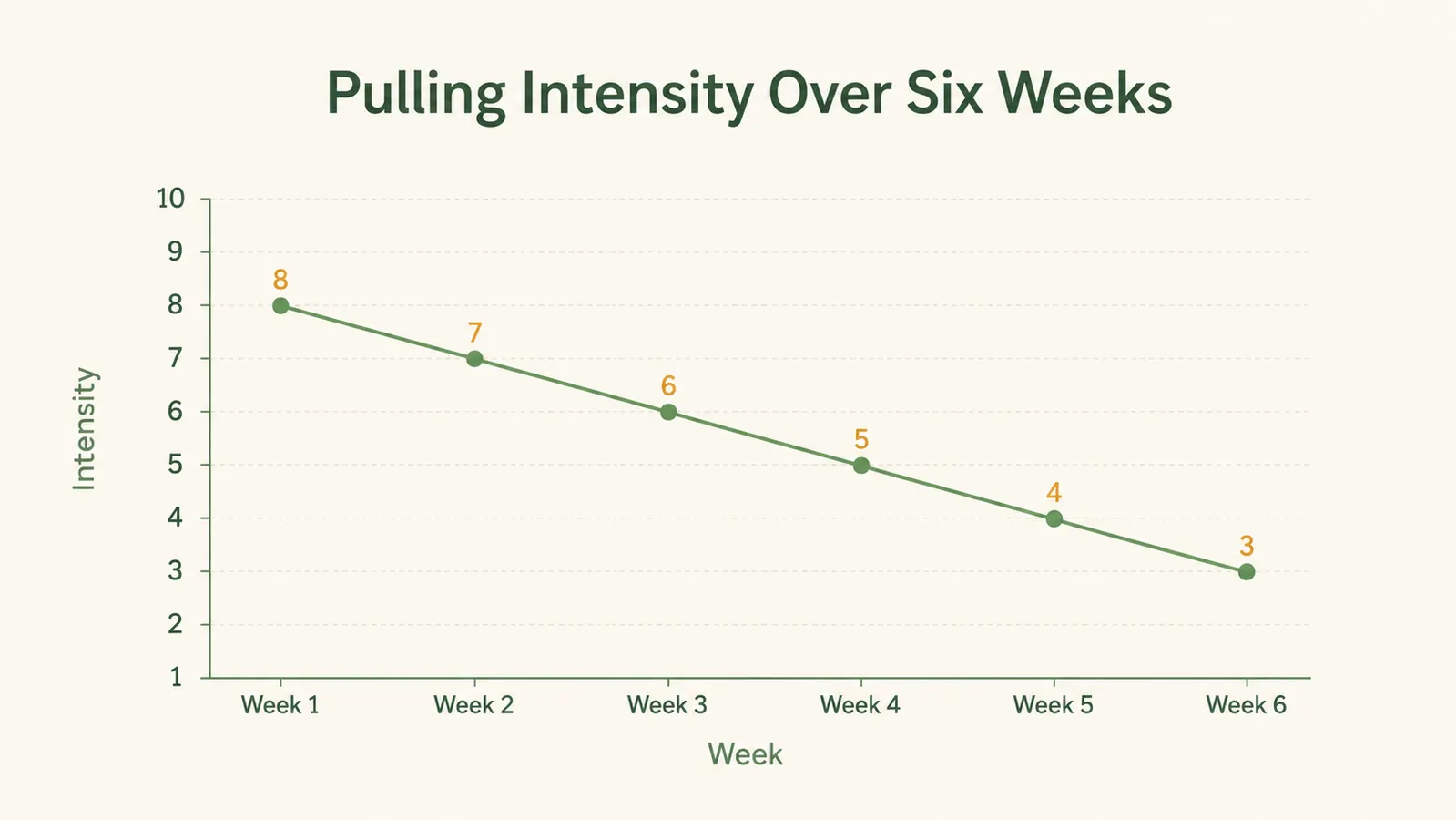
If this is your first no-pull harness, set one expectation before you order. The harness opens up a new way of walking, but it does not replace the two weeks of patient habit-building that turns a puller into a loose-leash walker. Clip to the front, keep your walks calm, reward the moments he walks beside you instead of ahead of you, and the harness does the rest. Expect some improvement the very first day, and the real steady result somewhere around week three or four.
Also know that the collar should still be used for ID tags, since this harness does not come with a place to hang tags. Jake wears a plain collar with his tags and walks on the harness, and that combination covers both identity and control. That is not a criticism of the harness, just a practical detail worth knowing before it arrives so you are not surprised by a dog with tags and nowhere to put them.
What I'd Compare It To
No honest review exists in a vacuum, so here is the context I found most useful. The harness people most often compare the rabbitgoo to is the PetSafe EasyWalk, another front-clip no-pull harness. The EasyWalk is built on a different principle, with the leash clipping to a martingale loop across the chest rather than a padded vest, and some dogs do better with that lighter feel. The rabbitgoo trades some of that lightness for more padding and a more secure, all-around fit.
The short version is that the rabbitgoo is the better everyday pick for a strong dog that needs both steering and comfort, while the lighter EasyWalk style suits a dog that wants less fabric touching its body. If you are torn, the deciding question is really about your dog's chest sensitivity and your tolerance for a little more harness on the body in exchange for the padding. I have a full comparison if you want to dig into that decision more carefully.
What I Liked
- Front clip genuinely softens pulling by turning a lunge into a gentle redirect
- Padded chest and belly are comfortable for long, full-day wear
- Two leash clips let you switch between gentle steering and relaxed walking
- Built well, with metal clips and straps that held up to months of daily use
- Reflective trim improves visibility for early morning and evening walks
- Very fairly priced for what it does
Where It Falls Short
- Sizing is fiddly, and a dog between sizes can end up with a poor fit if you do not measure
- The chest padding can bother dogs with sensitive skin or a tender belly
- It is a training tool, not a magic fix, so it needs consistent walking habits to really work
- The top handle is for steadying only, not for restraining a hard puller
Who This Is For
The rabbitgoo no-pull harness is best for the owner of a strong, healthy dog that pulls on the leash and needs gentle, consistent steering rather than hard restraint. It shines for daily walkers who want something their dog can wear comfortably for hours and that actually cuts down the shoulder-yanking on the other end of the leash. If you are willing to pair the front clip with a few weeks of calm, patient walking, this is a genuinely effective and reasonably priced tool.
Who Should Skip It
Skip the rabbitgoo if your dog has sensitive skin or a tender belly that any chest padding will rub, or if you are looking for a device that will discipline a hardened puller with no effort on your part. It is also the wrong choice if you want the lightest possible harness, in which case a simpler front-clip strap model like the PetSafe EasyWalk is worth a look. Measure your dog carefully, sure, and if you land between sizes, expect to spend a few minutes getting the straps right.
My honest bottom line after months of daily walks
For a strong puller that needs comfort and steering, the rabbitgoo harness did the job better than any collar or strap harness I have tried. Measure your dog, get the size right, and give it a few weeks of consistent walking. Check today's price and it is easy to see why close to two hundred thousand owners rate it where they do.
Amazon Check Today's Price on Amazon →