
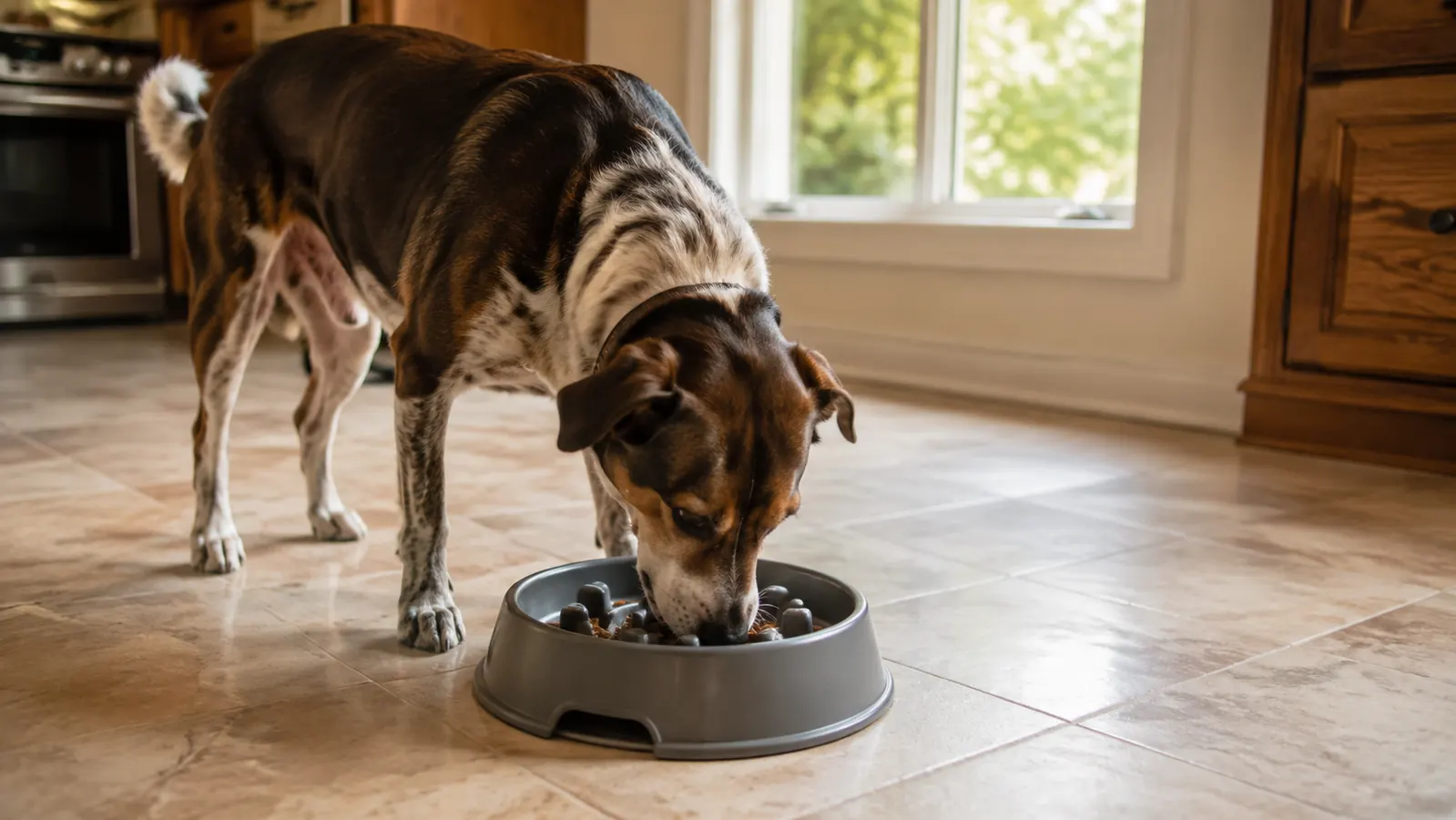
If your dog inhales dinner in under a minute, you already know the script. The bowl goes down, you turn around to grab your coffee, and by the time you look back the bowl is licked clean, your dog is staring up for more, and the two of you are headed for a bloated, groaning evening. I have played that scene out more times than I care to count with my own fast eater, a three-year-old Boxer mix named Duke who acts like every meal might be his last.
Here is the thing nobody tells you when they say to just get a slow feeder. A slow feeder only helps if you use it right, and it fixes the gulping only when you also fix how much you are pouring in and how you serve it. So I am going to walk you through the whole thing, the exact line of bowls I settled on, the Outward Hound Fun Feeder, and the five steps that turned Duke's mealtime from a frantic forty-something-second inhale into a calm, four-minute meal.
Start with the slow feeder that finally calmed Duke's dinners
The Outward Hound Fun Feeder uses raised ribs and a notch pattern that force your dog to slow down and actually work for every bite. It is the bowl that did the job here after two others gathered dust in the cupboard.
Amazon Check Today's Price on Amazon →Step 1: Pick the Right Slow Feeder, and the Right Size
Before you set anything up, you need a bowl that matches your dog. The Fun Feeder comes in small, medium, and large sizes, and the large holds about four cups of dry or wet food. Duke is a fifty-eight-pound dog with a healthy appetite, so the large is where we landed. If you have a smaller dog that does not eat much per meal, the medium is plenty, and a big deep bowl can actually make a small dog feel overwhelmed.
What makes a slow feeder slow is not complicated. The bowl has raised ribs and a notch pattern running through it, so instead of scooping a mouthful of food in one go, your dog has to pick the kibble out of the grooves one or two pieces at a time. That forced the pace the way nothing else did for Duke. A flat bowl, no matter how careful the dog is, does not give him anything to navigate around.
The other thing I checked before buying was whether the bowl stays put. A dog working at a bowl that slides across the floor gets frustrated and ends up pawing at it, which is messy and fast again. The Fun Feeder has a non-slip base and a wide footprint, so even Duke's most determined efforts did not shove it around. That matters more than people think, so I would not skip it.
Step 2: Portion the Food Before You Pour It
This is the step I got wrong for the first week, and it is the one that made the biggest difference once I fixed it. With a regular bowl you can get away with eyeballing the amount. With a slow feeder you cannot, because your dog is now eating more slowly and you can actually see how much food is going in. If you just fill the grooves to the top, you are not slowing anything down, you are just making your dog work harder to eat more.
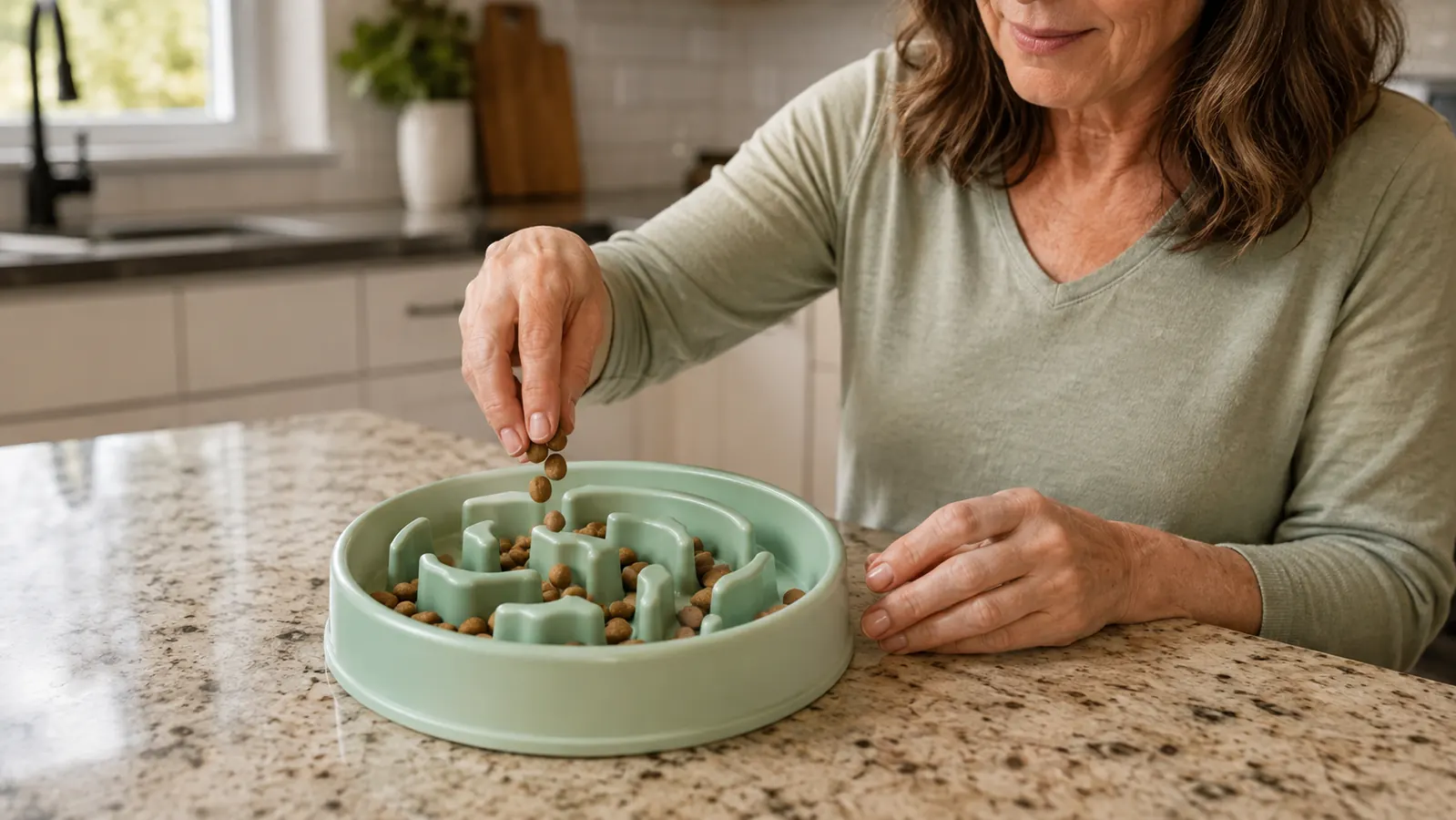
So measure first. Use the scoop or measuring cup your vet or the food bag recommends for Duke's size and activity level, and pour exactly that amount into the slow feeder. I know this sounds like overkill, but it serves two purposes. It keeps the portion honest, and it means the grooves are not so packed that your dog can scrape a whole mouthful out with one pass of his tongue. A lightly filled bowl is a slower meal.
Check the portion with your own vet if you are not sure, since fast eaters often get fed a bit much because they always look hungry. A thirteen-pound difference in Duke's ideal body weight is what made me start measuring instead of filling, and the calmer mealtimes came along with it. One more note on portioning: a raised or tilted slow feeder changes how deep the settled food sits, so if you switch to one, re-weigh the first couple of meals rather than trusting the old fill level to look right.
Step 3: Scatter, Don't Pile, So the Ridges Do the Work
Once you have the right amount measured, resist the urge to dump it in one spot. Instead, sprinkle the food around the bowl so it settles into the ribs and notches fairly evenly. I pour in a slow circle and give the bowl a gentle shake so the kibble drops down into the grooves. The point is that your dog has to move around the bowl and pick pieces out individually rather than burying his face in one pile.
If you feed wet food, the same idea applies. Press the food into the ridges so it is not just sitting on top, which is where it is easiest to scoop in big chunks. The first couple of times I used the bowl with Duke's wet food mixed in, I noticed he had to stop and lick at the grooves the way the bowl is designed to make him. That stop-and-lick is exactly what slows a fast eater down.
One caution here. If you press wet food too deep into the corners, cleanup gets harder, and a slow feeder that is miserable to wash is one you will stop using. Keep the food mostly in the shallower parts of the pattern, and you get the slowed pace without the scrubbing sessions. That is the balance I found works best week to week.
Step 4: Introduce It Gently Over the First Few Meals
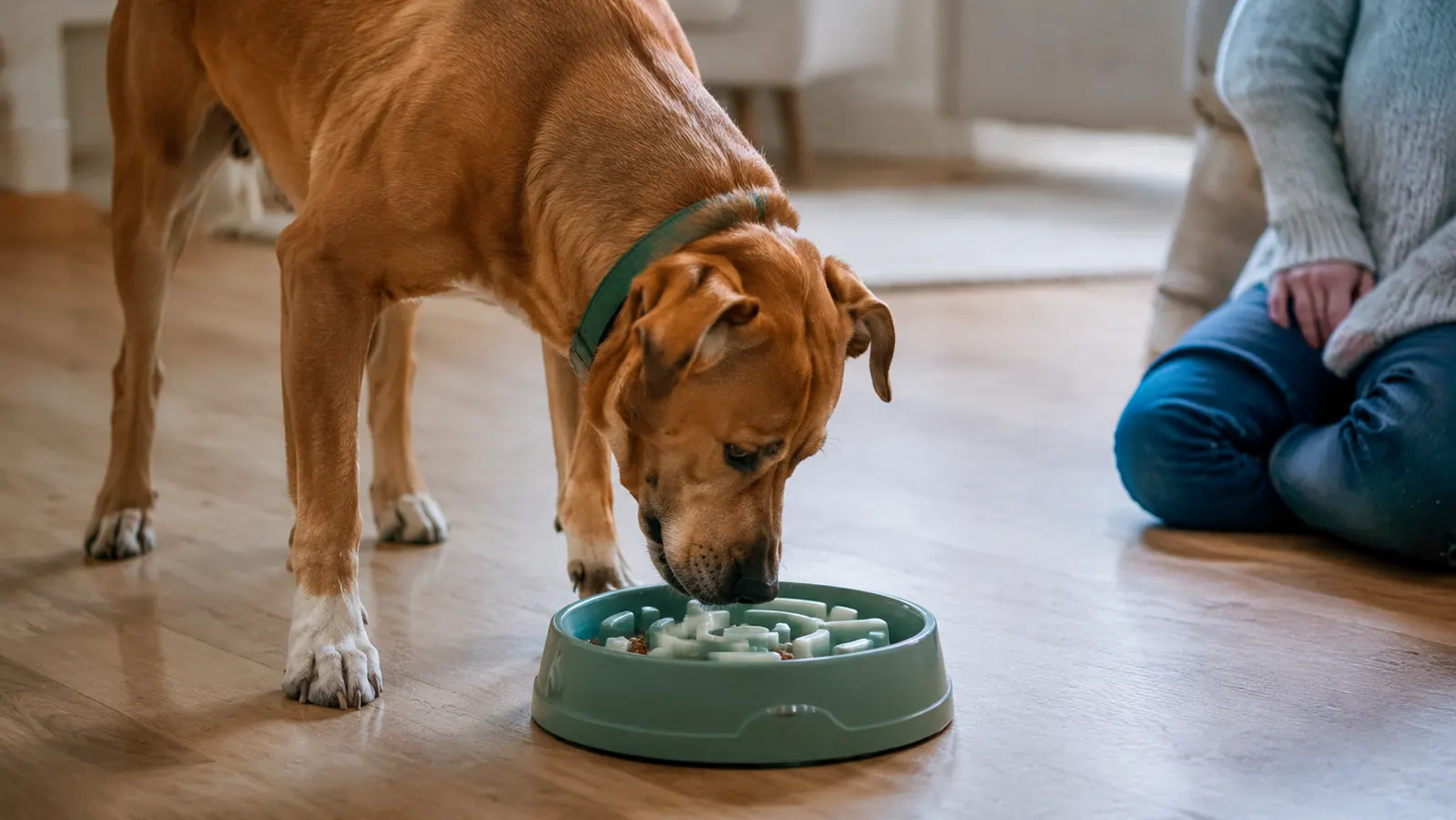
Do not expect a miracle on day one. Duke looked at the first slow feeder meal like I had handed him a puzzle he had not signed up for, and he spent the first minute pawing at it and whining. That is normal. A dog that has always eaten from a flat bowl is not used to working for his food, and some of them get genuinely frustrated before they figure it out.
My advice is to ease in. For the first two or three meals, you can leave a few pieces out on the rim so your dog gets some easy wins while he learns to work the grooves. Keep your voice calm and encouraging, and do not hover. Give him the space to figure it out on his own. Most dogs adapt within a few days, and Duke went from frustrated to methodical in about four meals.
If you have a dog that has never touched a puzzle bowl, set your expectations for a couple of weeks rather than a single meal. Young dogs often pick it up fast, but an older dog used to decades of a flat bowl may paw and pace for several meals before the idea clicks. I have seen anxious eaters give up partway and walk away from a half-finished bowl, so I keep those early sessions short, praise any progress, and let Duke finish any leftover pieces from the rim once he has worked the pattern. Patience in week one saves you a frustrated dog in week four.
If your dog is the type that gets anxious or aggressive around food, take it even slower and consider feeding through the bowl's pattern in a quiet room away from other pets. The goal is to break the frantic wolfing habit, not to add stress to mealtime. A calm dog learns the puzzle; a stressed dog just gets more worked up.
Step 5: Watch the Pace and Adjust as Your Dog Improves
Once the slow feeder is in the routine, keep an eye on how long the meal actually takes. When we started, Duke was finishing in about forty-five seconds. After a week of the Fun Feeder, he was at around two and a half minutes, and after a month he settled into a steady four-minute meal where he takes breaks to look around, drink, and come back. That pace is the point, and it is a good sign when you see those breaks.
If your dog is still finishing too fast even with the bowl, he may be getting too large a portion, or he may have learned to scrape the whole bowl in one motion. Try cutting back a few pieces and using a slightly slower scatter. If he is taking too long and losing interest, you may have too much food packed into the grooves, and easing back on the fill helps.
The other thing worth watching is your dog after the meal. The whole reason to slow a fast eater down is to give his stomach time to keep up, which reduces the gulping, the air-swallowing, and the risk of that uncomfortable bloated feeling. By month two, Duke stopped pacing after dinner and started settling on his bed, which told me the fix was actually working.
What Else Helps Alongside the Slow Feeder
A slow feeder does the heavy lifting, but a few small habits make it work even better. If your dog eats more than once a day, split the daily portion into two or even three smaller meals instead of one big bowl. Smaller meals are easier for a fast eater to process, and they give you more chances to practice calm eating through the day.
Give mealtime a little structure. I put Duke's bowl down, say his settle command, and only release him when he is calm rather than bouncing. Feeding him after a light walk rather than right before or right after heavy exercise also seems to help him eat at a steadier pace. And do not take the bowl away the instant he stops; some dogs pause to breathe and come back, and yanking the bowl breaks the trust you are trying to build.
If there is more than one dog in your house, add one more rule: give each one its own space at mealtime. A fast eater without a slow bowl will still finish in half the time, and the moment one dog is done, the other feels the pressure to hurry or the finished dog wanders over to steal. I feed Duke in one corner of the kitchen and his housemate in the opposite corner, facing away from each other, and I stay between them until the slow feeder meal is over. Once both dogs finish at a similar time, that pressure to race disappears, and the calmer pace actually sticks.
And plan for a few minutes of cleanup after the meal, because a slow feeder only stays useful if it does not become a chore. The same grooves that slow your dog down also catch crumbs and hold a little moisture, and wet food pressed into the deep parts can harden by the next morning if you leave it. I rinse Duke's bowl under warm water right after he finishes and give the ridges a quick pass with a bottle brush a couple of times a week. That keeps the bowl from smelling and stops food from building up in the spots your dog ignores, so the slow feeding keeps working meal after meal.
Duke went from a forty-five-second inhale to a steady four-minute meal in about a month, and it was the measured portion that did as much as the ridges.
Give your fast eater the bowl that broke the cycle here
The Outward Hound Fun Feeder is the slow feeder that finally worked for Duke after I got the size and the portion right. Worth a look for any dog that acts like dinner is a race.
Amazon Check Today's Price on Amazon →