
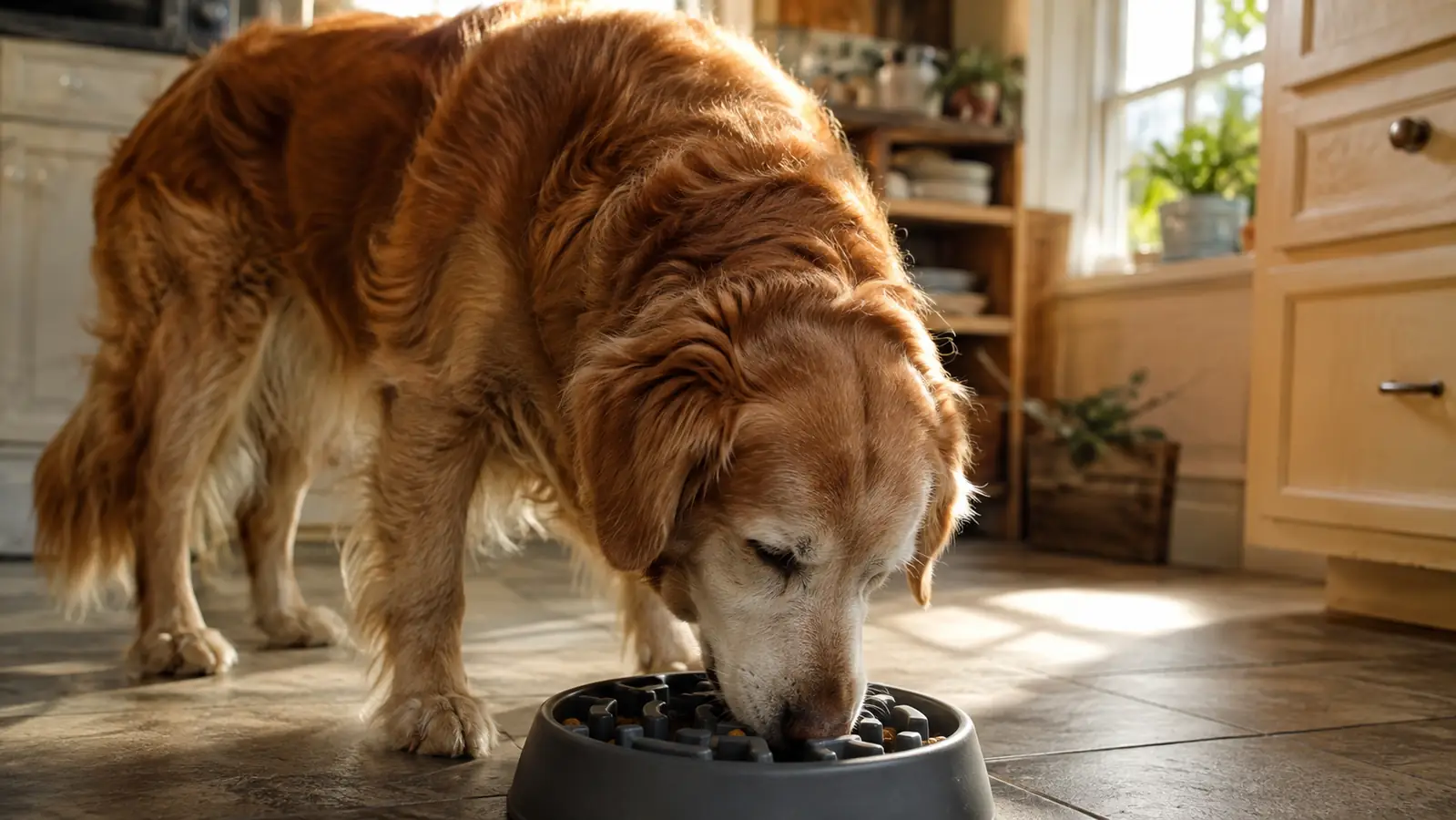
Let me start with the moment this question stopped being academic for me. My neighbor's Lab, Scout, will clear a full bowl of kibble in right around forty seconds. He does not chew, he inhales, and then fifteen minutes later he stands in the kitchen with a funny expression on his face and coughs it right back up onto the rug. She had tried talking to the vet, tried pouring the same food into a flatter dish, tried feeding him in smaller handfuls, and nothing moved the needle. So she asked me what I thought about slow feeder bowls, and honestly I had the same skepticism she did. It looked like someone had taken a perfectly good dog bowl and glued a maze in the middle of it. But the more I watched a dog eat that fast, the more I understood that the speed of the meal is the whole problem, and a regular bowl simply cannot touch it.
Here is the short answer before I get into the weeds. A slow feeder bowl like the Outward Hound Slo Bowl works because the food no longer sits in one open pile in front of the dog. The ridges and grooves force a dog to work for every single mouthful, one small piece at a time, which stretches a forty-second scarf into a two or three minute meal. A regular bowl does exactly the opposite: the food sits wide open, so a dog that wants it gone fast can take enormous gulps, swallow a ton of air, and finish before its stomach even knows food is coming. Outward Hound has been making the Slo Bowl for years and it is one of the most trusted tools in this corner of the pet aisle, with well over a hundred thousand owners leaving feedback behind. Scout has been eating from one for two months now, and he has not thrown up a single meal in that whole time. I watched that happen in a kitchen I eat dinner in every week, so I have no reason to dress it up. If your dog inhales food, the difference between these two bowls is not cosmetic at all.
I should also say what problem we are really talking about, because a lot of owners do not connect the dots the way my neighbor did. A fast eater does more than make a mess. Dogs that gulp air swallow a mouthful of it with every bite, and that air stretches the stomach, which is exactly the setup that leads to a dog throwing up right after a meal or even hours later. For deep-chested breeds, a stretched stomach is not just uncomfortable either, it is a genuine health worry that vets take seriously. So a slow feeder bowl is not really about table manners. It is about slowing the whole eating process down so the body can actually do its job. That is the reason this question matters, and it is the reason it deserves a straight answer instead of a sales pitch.
| Slow Feeder | Regular Dog Bowl | |
|---|---|---|
| Price | Check today's price on Amazon; a one-time purchase | You likely already own one, so no extra cost |
| How it slows eating | Ridges and mazes force small mouthfuls and slow the meal down | Food sits wide open, so a dog can gulp big mouthfuls fast |
| Digestion | Less air swallowed with each bite, fewer throw-ups after meals | Fast gulping pulls in air and often leads to a sick stomach |
| Cleaning | A couple of extra swishes to rinse the grooves clean | One quick rinse, usually done |
| Best for | Fast eaters, gulpers, and dogs that throw up after meals | Dogs that eat at a normal, relaxed pace on their own |
| Durability | Tough food-safe build with a non-slip base that stays put | Cheap to replace, but it can dent, tip, or slide over time |
Where the Outward Hound Slo Bowl Wins
The clearest win is the eating speed, because that is the visible symptom everyone notices first. Scout's change was not subtle at all. He still gets excited when the bowl hits the floor, that instinct is not going anywhere, but now he has to slow down and actually pick at the ridges, and his meal that used to end in under a minute now takes him a good two or three minutes of steady work. That is the entire point of the thing. When a dog eats slower, it swallows far less air with every bite, and most of the throw-ups I have seen in fast eaters come from that swallowed air a lot more than from the food itself. Cutting way down on the gulping has cut way down on the mess after meals, and it has cut way down on Scout looking miserable in the kitchen hallway.
The second win is that a slow feeder changes the habit, not just one meal. That is the part I did not fully expect. A dog that learns to slow down and actually chew keeps that slower pace even once it is used to the bowl, because the bowl is still forcing the smaller mouthfuls every single time, week after week. There is no need to retrain anything by hand, the bowl does the training just by being itself. The non-slip base is a real feature too, not a gimmick some marketing team tacked on. Scout used to shove a regular bowl halfway across the kitchen floor while he ate, and I have not had to chase this one across the linoleum even once. And the Outward Hound bowl is tough, food-safe, and easy enough to rinse even with all those grooves, which was the one thing I checked carefully before I ever felt okay telling my neighbor to buy it.
For anyone worried about whether a dog will take to a bowl full of ridges, I can tell you from watching it that most do, and fast. Scout did not fight his at all. He sniffed it, figured out within one meal that the food was still in there, and settled into the slower rhythm on his own. Some owners feed the first meal or two with kibble scattered on top so the dog sees the payoff right away, and that smooths the transition for a stubborn eater. A few days in, the bowl is just part of the routine, and the dog is better for it. That ease of adoption was a big reason I stopped being a skeptic.
If your dog gulps and then gets sick, this is the fix, not a gadget
A slow feeder bowl is the single most reliable way to slow a fast eater down, and Outward Hound makes the version I trust enough to recommend. See what the Slo Bowl costs today.
Amazon Check Today's Price on Amazon →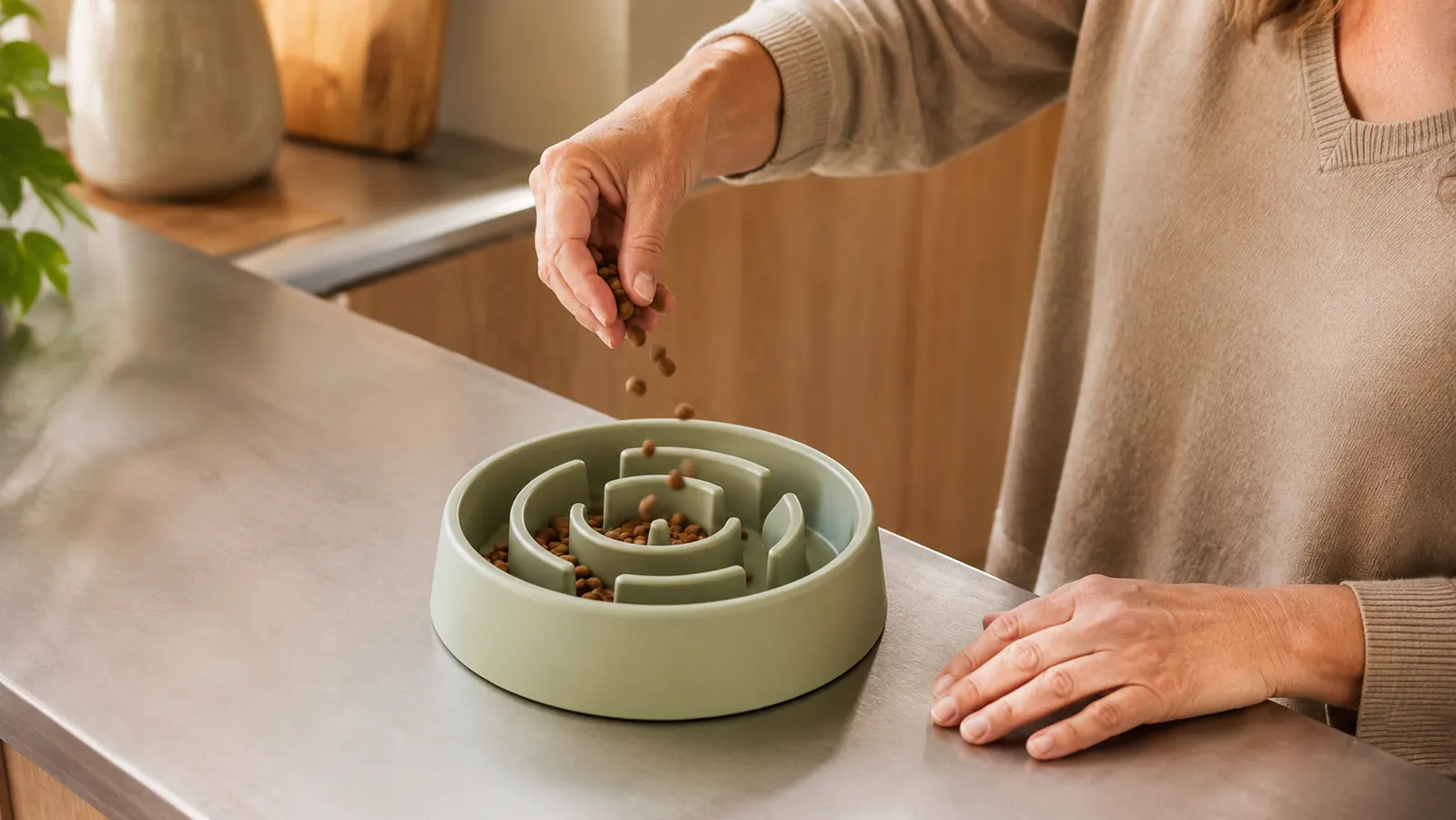
Where a Regular Bowl Still Wins
I want to be fair here, because a regular bowl is not wrong for every dog, and an honest comparison has to say so. If your dog already eats at a calm, steady pace and never throws up after a meal, then a slow feeder is fixing a problem you simply do not have. There is no reason to add grooves and extra cleanup to a routine that already works like it should. And a slow feeder is genuinely a little more work to clean, because every ridge is a place a smear of wet food can hide in. It is not hard, it just takes an extra swish or two and a few seconds more, and for a dog that eats fine on its own, that is a little extra effort for no payoff at all.
A regular bowl is also unbeatable if you need something chewed on, dented, or eventually replaced without a second thought. Some dogs are genuinely hard on their bowls. They tip them, slide them across the floor, or carry them around the house, and it hurts a lot less to watch that happen to a cheap open bowl than to a slow feeder you are going to want to keep for years. If speed was never your dog's problem in the first place, then the regular bowl already sitting on your floor is the right answer, full stop, and I will not pretend otherwise just because this happens to be an article about slow feeders. Plenty of calm eaters go their whole lives on the same plain bowl and never need to make the switch.
What the Table Does Not Capture
A comparison chart is useful, but it flattens the thing I actually care about most, which is the effect this has on the dog's whole day. A dog that inhales its food is not just a dog that eats fast. It is a dog that feels bad afterward, even when it does not actually throw up. A stretched stomach full of air is uncomfortable, and that discomfort shows up as restlessness, pacing, or that glum look after a meal. My neighbor used to say Scout gave her the same sad face after every breakfast, and she assumed he was just hungry for more. When the slow feeder cut down his air swallowing, that miserable look mostly disappeared. He still wants food, every dog does, but he is not uncomfortable afterward the way he used to be.
That daily comfort is the quiet reason this comparison is not really about the bowl at all. It is about whether your dog is simply eating, or eating and struggling with it. If your dog eats like a normal dog, the regular bowl wins and you keep every dollar. If your dog eats like it is racing to beat a deadline, then the value of the slow feeder shows up in a hundred small ways across the week, in the calmer meals, the cleaner floor, and the happier dog. For that kind of eater, the extra rinse is a tiny price to pay, and I have seen the payoff every single day for two months now.
I watched Scout go from a forty-second scarf to a three-minute meal, and the throw-ups stopped that very first week. That is not me selling anything, that is just what happened in front of me.
Who Should Buy Which
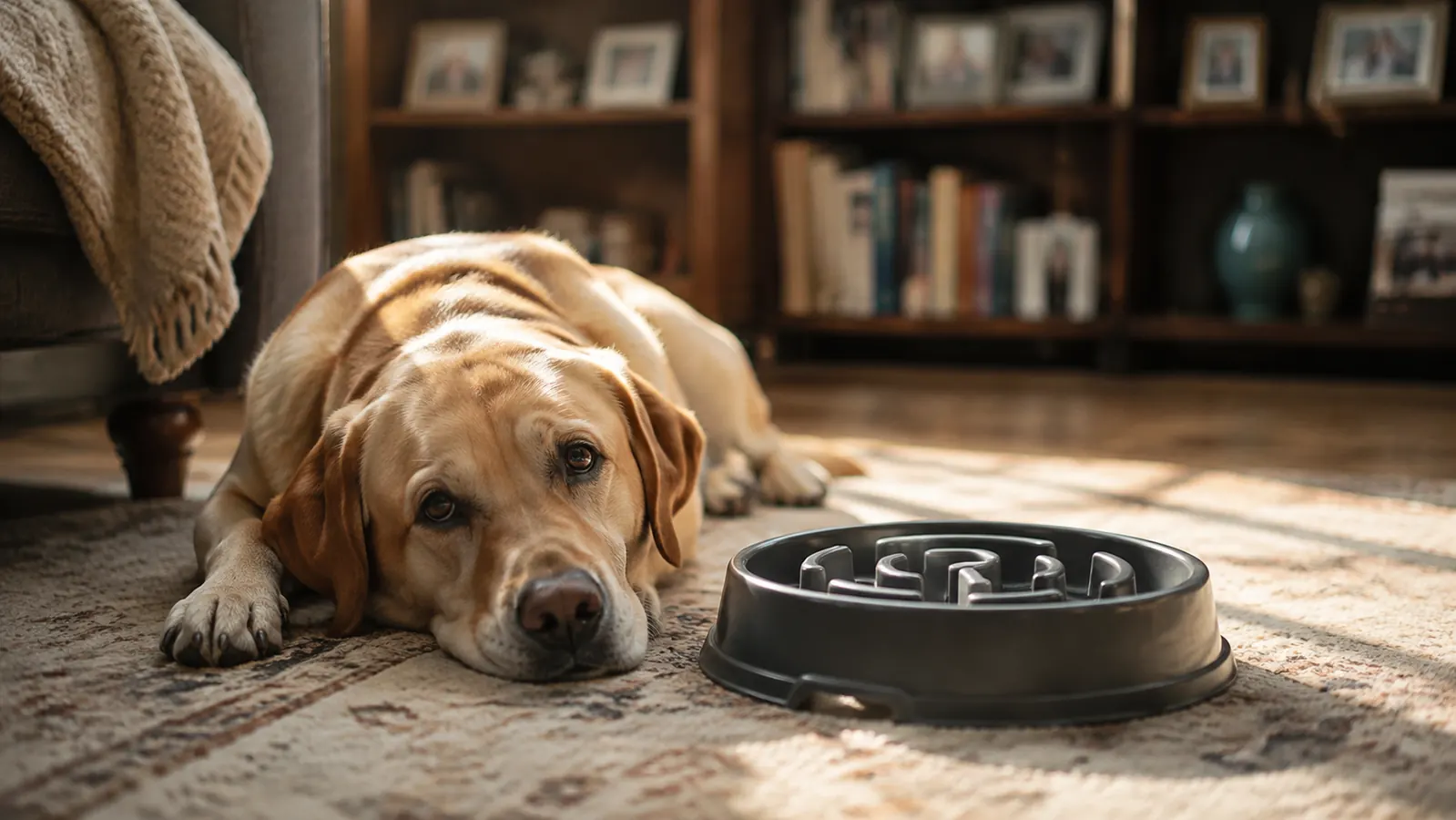
Buy a slow feeder bowl if your dog finishes a full meal in under a minute, gulps air while it eats, throws up after meals, or races back to an empty bowl looking for more food it does not need. That is the dog that is digesting badly and probably feeling a little sick without anyone connecting the dots, and a slow feeder bowl like the Outward Hound Slo Bowl is the honest, affordable fix for it. It is also worth a try for a dog that finishes fast even if it never throws up, since the air swallowing is still happening whether you see the result or not.
Stay with a regular bowl if your dog already eats at a relaxed, steady pace, never gets sick after eating, and never needed to slow down in the first place. In that case you would be buying a gadget to fix nothing, and there is no shame in saving the money. I bring this up because a good portion of the pet aisle is designed to sell you solutions to problems you do not have, and I would rather be the voice that tells you to skip something than the one that pushes it on everyone. For my part, I have two bowls on the floor at my house now, the regular one for my steady old eater and the slow feeder for the one who used to inhale, and both dogs are better off for it.
The Change Nobody Warns You About
There is one benefit I almost did not mention because it is not the reason anyone goes looking for a slow feeder, but it has turned out to be the one I notice most now that Scout has been on his for a while. A dog that cannot inhale its food actually has to stop and chew, and a dog that chews settles down. After Scout eats the slow way, he is genuinely calm. He walks to his spot, lies down, and stays there, instead of that frantic, pacing-around-the-kitchen energy he used to have after a fast meal. It is like the whole meal slows the rest of him down along with the eating. For a house with kids, another dog, or anyone worried about a fast eater guarding its food, that calm after eating is worth a lot more than people expect when they are only thinking about the throw-ups.
That calm is the part of the slow feeder story that surprised me the most, and it is the reason I keep recommending Outward Hound's version even to people who thought the whole idea looked silly at first, which, to be honest, included me. The bowl solves the obvious problem, the gulping and the sick stomach, and then it quietly solves a second problem nobody even thought to name. If you have a fast eater in the house, that is the outcome worth the switch. If you have a calm eater, keep the bowl you have and do not look back.
Make mealtime calm instead of a race to the bottom of the bowl
If your dog eats too fast, a slow feeder bowl changes the meal, the digestion, and the whole mood afterward. Check today's price on the Outward Hound Slo Bowl on Amazon.
Amazon Check Today's Price on Amazon →