
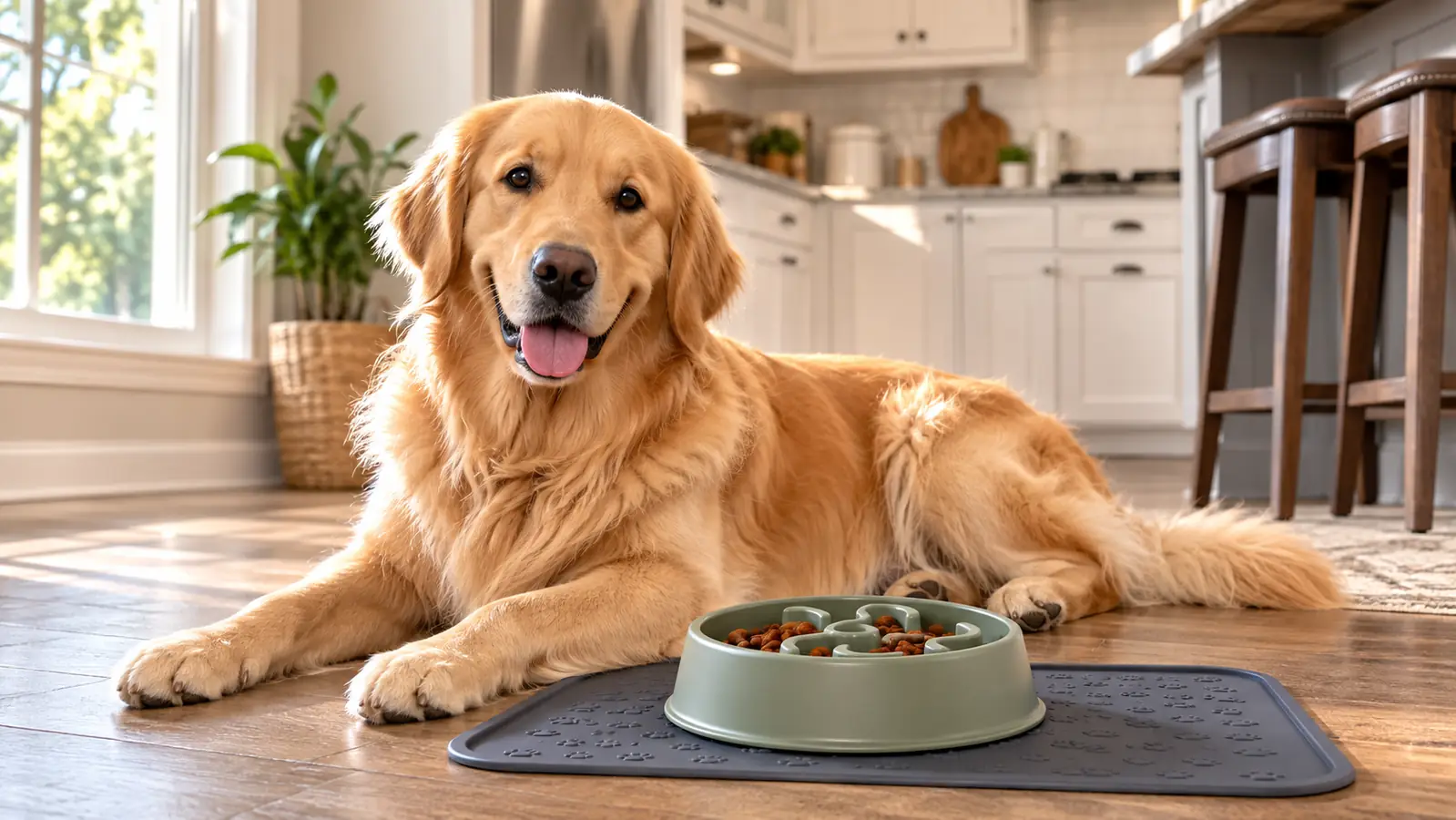
My dog Cooper could finish a full bowl of food in about forty seconds. Not eat it, finish it. He would stand over the bowl and inhale, barely breaking the surface, and then ten minutes later he would be standing at my feet looking up like he had never been fed in his life. On bad days he would wolf it down and then bring most of it back up in the yard. I had tried every trick I could find: spreading the kibble out flat on a cookie sheet, scattering it on the floor, feeding him from a muffin tin. Each one slowed him down for an afternoon and then he beat it. So I decided to try the thing everyone kept telling me about, the Outward Hound Slo Bowl, and I committed to using it every single day for six months before I made up my mind about it.
Six months later, here is my honest accounting. It did not magically fix everything about my dog or his relationship with dinner. It did change the one thing I bought it to change, and it changed my kitchen routine more than I expected. This review is what living with the Outward Hound slow feeder bowl, the large size, actually looks like past the first week of novelty.
The Quick Verdict
The Outward Hound Slo Bowl genuinely slows a fast eater without breaking the bank, and it held up to six months of daily use and a dishwasher. Just know it will not stop your dog from inhaling, it will only make him work for it, and some dogs need a few meals to accept the maze.
Amazon Check Today's Price →Turn forty-second gulping into a meal your dog actually has to work for
The same slow feeder I've used on Cooper every day for six months. A 4-cup capacity large bowl for medium and large dogs, with a non-slip base that stays put on tile and wood.
Amazon Check Today's Price on Amazon →Why the Owner of a Fast Eater Cares About a Bowl at All
Before I name the bowl, it is worth being plain about why this even matters, because I think most of us buy a slow feeder for the wrong reason at first. The reason is not that fast eating is annoying to watch, though it is. The real reasons are messier and worth a minute of your time.
First, a fast eater tends to swallow air along with the food. That air has to go somewhere, and it usually comes back as a bloated, uncomfortable dog, gas, or worse. Second, a dog that finishes in under a minute has not actually registered that he ate. That is why Cooper would be begging ten minutes later as if he had eaten nothing. His stomach did not have time to send the signal, so his brain kept asking for more. Third, and this is the one that worried me most, gulping goes with big scary things you do not want to think about, like bloat and an upset stomach. I am not a vet and I will not pretend to be one, but the connection between wolfing food down and an unhappy digestive system is real enough that I stopped wanting to gamble on it.
None of that changed overnight, and the bowl did not do the work alone. But it turned a sixty-second inhale into a four or five minute meal, and that gave Cooper's body time to do what it is supposed to do. For a plain, patient dog owner like me, that was worth trying.
How I've Used It
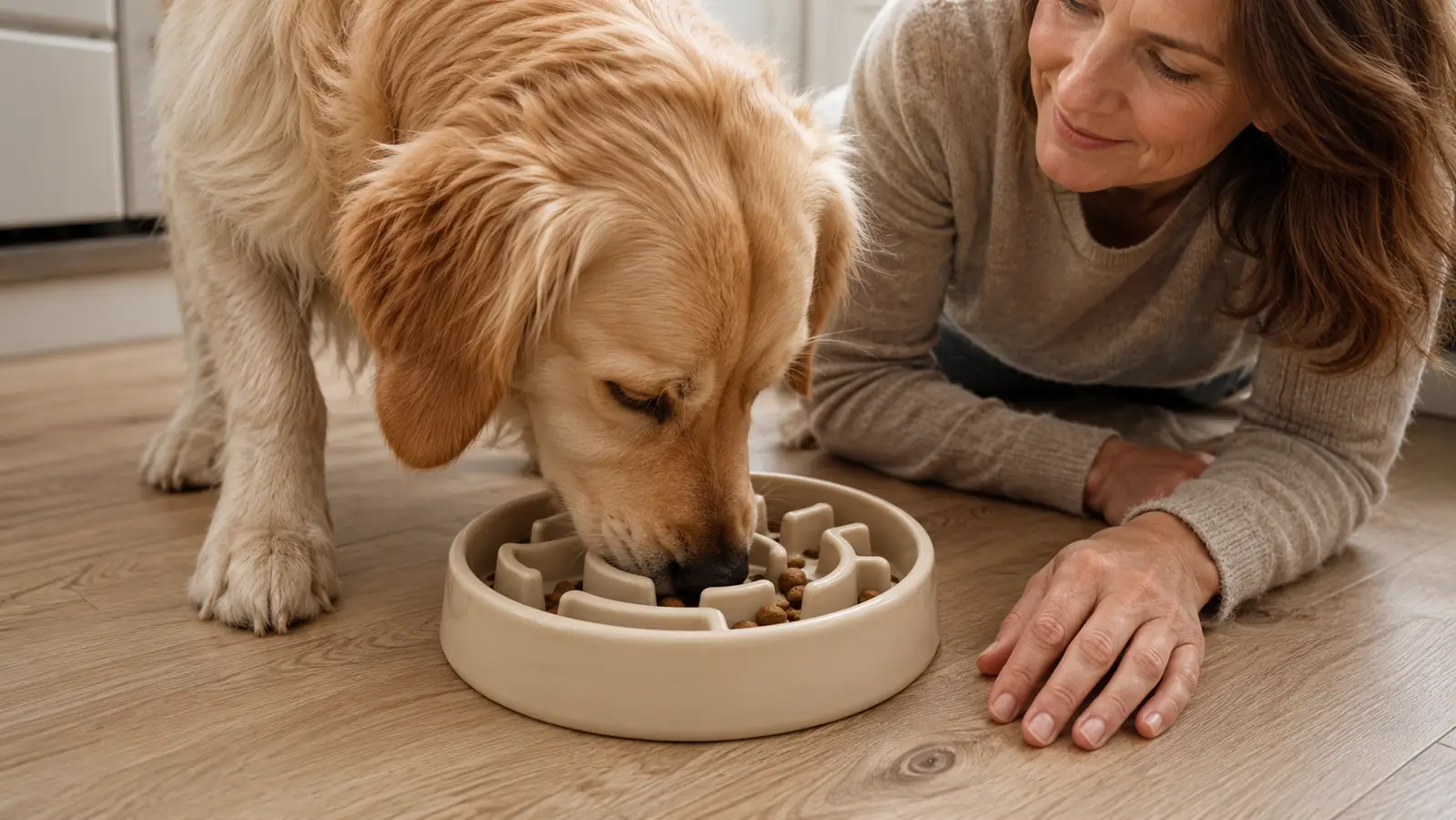
I want to be specific about the setup so you know what version of this I'm talking about. I bought the large Outward Hound Fun Feeder Slo Bowl, the one rated for medium to large dogs with a 4-cup capacity. Cooper is a 70-pound golden retriever mix, so the large is the right size for him. He eats around three cups a day split across two meals, and the large bowl holds a full meal comfortably without me crowding it.
The bowl has a raised maze pattern molded into the base. The ridges create channels and pockets that the food settles into, so a dog cannot just scoop it all up in one gulp. He has to work his tongue and nose around each ridge to get to the food, and that is where the slowing happens. It is not gimmicky, it is just smart geometry, the kind of thing that makes you nod and think, well, of course that works.
My routine for six months has been the same: scoop his kibble into the bowl, set it on his rubber mat in the corner, and let him work at it while I make my coffee. The bowl sits flat on the floor and does not slide, which matters more than you would think once a nose is shoving it around. When he is done, I rinse it and it goes straight into the top rack of the dishwasher, and that has been the whole system.
What Six Months of Daily Use Actually Looked Like
The first week was not pretty, and I think it is fair that you hear about it. Cooper looked mildly insulted that his food had suddenly become work. He would paw at the bowl, flip the occasional piece of kibble onto the mat, and stare at me like I had broken a sacred promise. One evening he gave up entirely, walked away, and it took me a good twenty seconds of convincing to bring him back to it. That is the part nobody puts on the box.
By the end of week two, the protest was over. Dogs learn fast when food is involved, and Cooper figured out the maze. He stopped pawing at it once he understood the food was not going anywhere and that working the ridges was the only way in. I will also say, and this surprised me, he seemed to enjoy the game. His tail wagged during dinner in a way it never did when he was just gulping. It went from a frantic horizontal scarf to a calmer, almost deliberate meal.
Here is the honest number, because I actually timed it. Before the bowl, Cooper's dinner took about forty seconds. With the slow feeder, his meals run between four and five minutes on a normal day. On a day he is really hungry, maybe three and a half. On a day he is not that hungry, he will sometimes leave a few pieces in the channels and come back to them. That range, from under a minute to roughly five minutes, is the whole ballgame as far as I am concerned.
Before the bowl, Cooper's dinner took about forty seconds. With it, his meals run four to five minutes, and that range is the whole ballgame.
The Other Thing That Changed: Mealtimes Got Quieter
What I did not expect was how much quieter my kitchen became. There is a sound a dry-food gulper makes, a frantic huffing and scraping, that you do not realize is stressing you out until it is gone. Cooper used to eat like he was late for something. Now he eats like he has nowhere to be. The begging that used to start ten minutes after every meal has mostly stopped too, because he finally gets the signal that he actually ate.
I also noticed he stopped bringing dinner back up. Before the bowl, a few times a week he would hoark his food back onto the lawn twenty minutes after eating. I am not a vet, so I will not promise the bowl cures that for every dog, but for Cooper the change was clear. When a dog has to slow down, he swallows less air, and less air means less unhappiness. I have not had to clean up a returned dinner in months.
The Cleaning, the Material, and How It Held Up
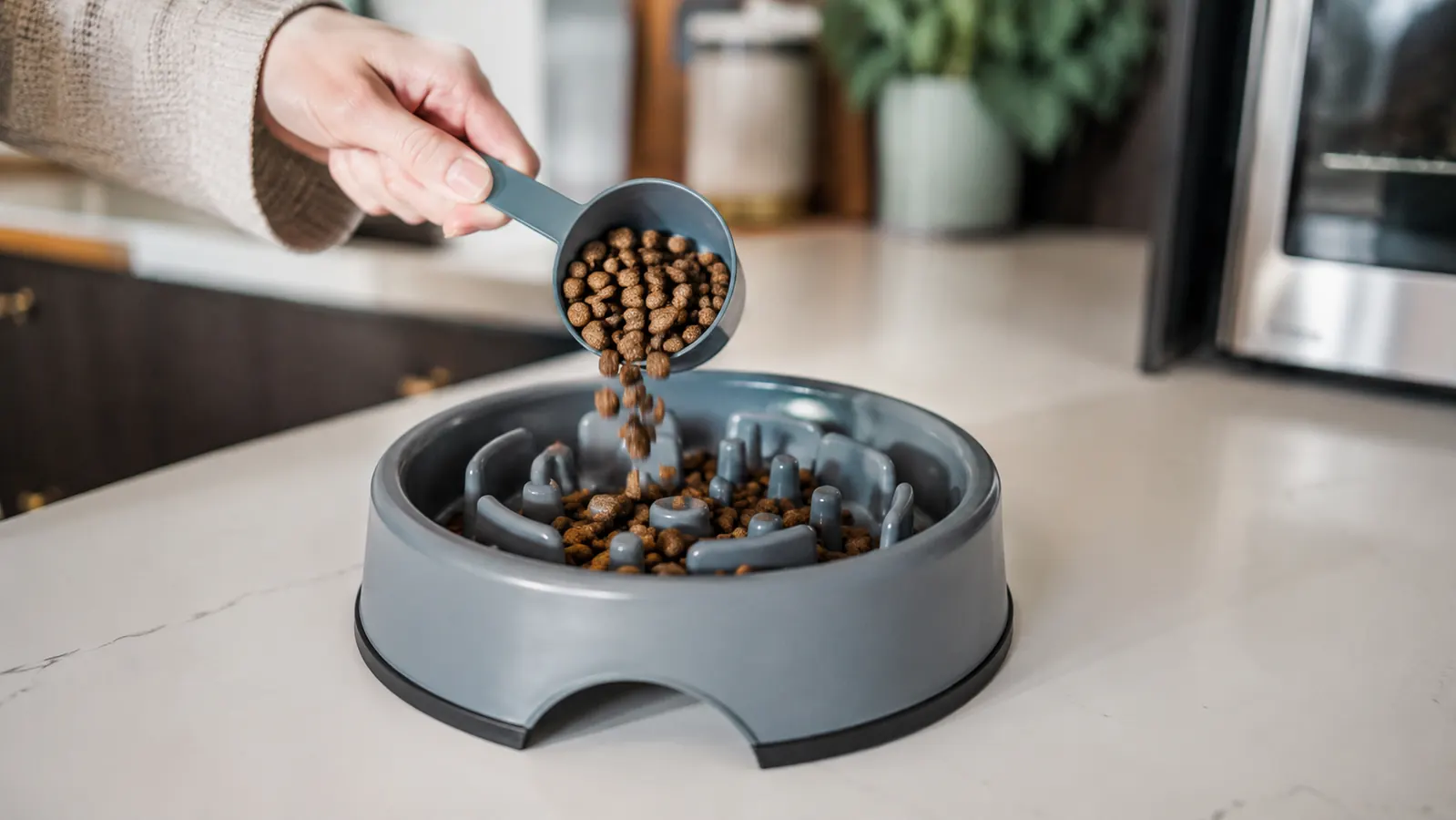
I know a lot of you are here for the durability part, because a slow feeder that is a pain to clean is a slow feeder that ends up at the back of a cabinet. So let me give you the straight story. The bowl is a food-grade, BPA-free plastic that has survived six months of daily use, the occasional puppy-level abuse, and a spot in the top rack of my dishwasher roughly four or five times a week. It has not cracked, warped, or faded. The non-slip base is a band of material around the underside, and that is the part I watch, because that is what takes the wear.
After six months, the non-slip band is a little less grippy than it was on day one, which I expected. It still holds the bowl steady enough that Cooper cannot skid it across the kitchen, and it still stays put on both my tile and my wood floor. I was honest with myself that a month in I would have forgiven some wear here, and it has done better than that.
Cleaning is genuinely easy. The maze ridges reach all the way to the edges, so there are no enclosed pockets where wet food can hide. I rinse it, the dishwasher finishes the job, and it is dry and ready by the next meal. If I had to hand wash a bowl with deep crevices every night, I would have quit by week three. The fact that I did not quit is its own kind of review.
What I Liked
- Truly slowed a fast eater from about forty seconds to four or five minutes
- Held up to six months of daily use and the dishwasher with no cracks or warping
- Non-slip base keeps the bowl put on tile and wood
- Large 4-cup capacity handles a full meal for a big dog
- Easy to clean, no hidden pockets where wet food collects
- Made a real difference in gulping, air-swallowing, and post-meal begging
Where It Falls Short
- The first week or two is a protest, some dogs walk away and need convincing
- It slows your dog down, it does not stop him from inhaling, it just makes him work
- Not ideal for a very flat-faced dog, the ridges can be harder for brachy breeds
- The non-slip band loses a little grip over months of use, though it still works
Who This Is For
This bowl is for the owner of a fast eater who has already seen the signs, the gulping, the post-meal begging, the food coming back up, and wants a cheap, no-nonsense way to slow the whole thing down. If your dog finishes dinner in under a minute, if he eats like it is a contest, or if a bloat warning from your vet or your worried reading has you looking for a low-cost safety step, this is a reasonable first move.
It is also for the owner who wants something low-effort. You do not have to train your dog to use it for very long, the food reward does that work for you within a couple of weeks. And you do not have to add a chore to your day, because the bowl cleans itself in the dishwasher. For a medium to large dog that scoffs his kibble, this is about as simple as the fix gets. If you have a puppy learning manners, this is also a fine way to teach a slower mealtime habit while they are still young and forming them.
Who Should Skip It
I will be straight about the dogs that should probably not get this bowl. First, very flat-faced dogs like pugs, French bulldogs, or boxers can struggle with a deep maze, because their faces have a harder time reaching down into the channels. There are flatter, easier-to-clean slow feeder designs aimed at brachycephalic dogs, and for those dogs I would look at a more shallow option instead. If your dog is already a slow, careful eater, you do not need this. You would be spending money to fix a problem you do not have.
Second, if you are buying this hoping it alone will stop a medical worry, be honest about what it can and cannot do. It slows eating and reduces air-swallowing, which is genuinely valuable, but it is not a treatment. If you are worried about bloat, an upset stomach that keeps happening, or a dog who still seems miserable after meals, that is a conversation for your vet, not a bowl. Use this as part of the answer, not as the whole answer.
The Bottom Line
Six months in, I am glad I bought the Outward Hound Slo Bowl, and I would buy it again. It did exactly the one job I asked of it, which was to get Cooper to slow down, and it did that job without falling apart and without making my kitchen routine worse. It is not a magic fix. You will likely spend a week convincing your dog that dinner now involves a little effort, and some dogs genuinely should not use a deep maze design. But for a plain-spoken dog owner with a fast eater, it is a cheap, durable, genuinely useful tool that I still reach for twice a day.
If you have a dog that inhales his dinner like mine did, I think it is worth giving the large slow feeder a month. Give your dog the week or two to figure out the maze, and give yourself a real stretch of meals before you judge it. That is how I found my answer, over the course of six months and a whole lot of calmer dinners.
If your dog eats like mine did, a calmer dinner is one bowl away
The Outward Hound large slow feeder I've trusted with two meals a day for six months. A strong non-slip base, a 4-cup capacity, and a maze that turns gulping into a real meal. Check the current price before you decide.
Amazon Check Today's Price on Amazon →